Truth and the cabbage
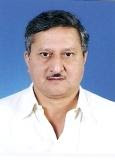
by…Kalidas Sawkar
The boy said “My father says this is not the truth he meant, he knows truth is truth; its size does not matter. He wants to know what the ‘Eternal Truth’ is.”
The teacher took him to the garden and picked up a cabbage. “Look, with this you will understand how the eternal truth is.”
The boy took the cabbage and peeled off its outer leaf. Under it was just as he had often seen at home. He peeled another leaf and threw it away and continued peeling and throwing them away. The teacher kept smiling. In time, all the leaves were peeled and thrown away with the boy having only the harder stalk left in his hand.
The teacher asked “Now, what do you have to say?”
“Teacher, is this the Eternal Truth? Oh, where is it?” boy asked.
The teacher swept his hand over the strewn cabbage leaves. “All this is the Eternal Truth in whose quest you came to me. Every occasion you threw a leaf away you cast aside the Truth of the Moment imagining Eternal Truth to be something dramatically different from the everyday truth arriving at the end. My child, ‘Eternal Truth’ is the description of every second that we ignore anticipating the holy moment when something hallowed will appear and introduce itself to us. In doing so, we spurn every moment and the opportunity that comes riding on it. The end is the hard reality of the moments we have not exploited and that shall not return; earlier leaves were the youthful part of this hard stalk, too. In simple words, live every moment fully, do not wait for the holy enlightenment.
From…Kaliyug ki kahania
Published in “Paths of Wisdom” in ‘Herald’ of March 25, 2011
Friday, March 25, 2011

Tuesday, March 1, 2011
Truth and the cauliflower
The boy went to his teacher and asked of him, “What is the meaning of ‘The truth’?”
Teacher said, “Come with me. It is easier to explain truth to you with some easy examples. Let’s go to the garden behind my home”. There, he picked up a cauliflower lying by a plant and said “truth is like a cauliflower, take and you will find the meaning of the truth.” The boy looked intently at it, carefully moved a small portion from the whole cauliflower and another, and kept them aside. However, the boy noticed that every big portion was like smaller one and that bigger divisions were made of smaller similar bulbs. Only the size differed. The boy had often eaten cauliflower at meals but it had never struck him this, a part just like the whole. He looked at the teacher enquiringly.
The teacher smiled and responded” Truth is like this, smaller bulbs are just as the bigger ones all having the taste and nutrients of the whole cauliflower. Lookalikes, too!
“Cauliflower, which interestingly looks like a human brain, is a nature’s product in fractal design. Nature loves this design and employs it often. As one example, electrons, who bring us electricity move around atoms, and Mother Earth, which carries all the matter that is these atoms, moves around the Sun. The stars move around in a Galaxy, which moves around the center of the Universe. Another fractal pattern!
“In fractals and in truth exemplified above, the size does not matter, ‘design’ does. There is no smallness about truth! Just as about corruption, little or big does not matter. Smaller corruptions accumulate into bigger scams”
From…Kaliyug ki kahania
Teacher said, “Come with me. It is easier to explain truth to you with some easy examples. Let’s go to the garden behind my home”. There, he picked up a cauliflower lying by a plant and said “truth is like a cauliflower, take and you will find the meaning of the truth.” The boy looked intently at it, carefully moved a small portion from the whole cauliflower and another, and kept them aside. However, the boy noticed that every big portion was like smaller one and that bigger divisions were made of smaller similar bulbs. Only the size differed. The boy had often eaten cauliflower at meals but it had never struck him this, a part just like the whole. He looked at the teacher enquiringly.
The teacher smiled and responded” Truth is like this, smaller bulbs are just as the bigger ones all having the taste and nutrients of the whole cauliflower. Lookalikes, too!
“Cauliflower, which interestingly looks like a human brain, is a nature’s product in fractal design. Nature loves this design and employs it often. As one example, electrons, who bring us electricity move around atoms, and Mother Earth, which carries all the matter that is these atoms, moves around the Sun. The stars move around in a Galaxy, which moves around the center of the Universe. Another fractal pattern!
“In fractals and in truth exemplified above, the size does not matter, ‘design’ does. There is no smallness about truth! Just as about corruption, little or big does not matter. Smaller corruptions accumulate into bigger scams”
From…Kaliyug ki kahania
Monday, February 28, 2011
Age, information and truth
Age and information (words 269)
…Kalidas Sawkar
The boy grew up, was 12 year old, intelligent and smart. The conservative father enquired certain information of his friends, all between 20 and 25 yrs. None knew the answer. The 12 year old son had the answer, but there was command in the family that when elders are speaking, younger generation should not butt their nose. After not getting the answer the father rebuked his friends for not telling the answer. Then, one replied, “when the answer is not known, how and what could be said”. The father in his dominating ways said, “Ok, guess”. To this the 12 year old thought, ‘since nobody knows, I might as well give the answer’. He gave his reply, but father was angry because a child has interfered with the elders.
He asked, “How do you know?”
The child said, “My friend told me.”
“How old is your friend”.
“16”.
Father said “My friend is 22. Now, tell me is number 22 bigger or 16 is?”
Son said “22 is bigger, but knowledge does not depend on age”
This was followed by the father’s tirade on dependence of knowledge on age and sage for a couple of hours.
As it turned out, the answer by son’s friend who was 16 turned out to be factual. However the generation gap persisted and so did the difference between old ways and the new, old perceptions and the newer information and a father and his son. A child is the father of man, they say, so fathers should try to be sons to have new perceptions of the changing society for harmony in family.
…From Kaliyug ki kahania
…Kalidas Sawkar
The boy grew up, was 12 year old, intelligent and smart. The conservative father enquired certain information of his friends, all between 20 and 25 yrs. None knew the answer. The 12 year old son had the answer, but there was command in the family that when elders are speaking, younger generation should not butt their nose. After not getting the answer the father rebuked his friends for not telling the answer. Then, one replied, “when the answer is not known, how and what could be said”. The father in his dominating ways said, “Ok, guess”. To this the 12 year old thought, ‘since nobody knows, I might as well give the answer’. He gave his reply, but father was angry because a child has interfered with the elders.
He asked, “How do you know?”
The child said, “My friend told me.”
“How old is your friend”.
“16”.
Father said “My friend is 22. Now, tell me is number 22 bigger or 16 is?”
Son said “22 is bigger, but knowledge does not depend on age”
This was followed by the father’s tirade on dependence of knowledge on age and sage for a couple of hours.
As it turned out, the answer by son’s friend who was 16 turned out to be factual. However the generation gap persisted and so did the difference between old ways and the new, old perceptions and the newer information and a father and his son. A child is the father of man, they say, so fathers should try to be sons to have new perceptions of the changing society for harmony in family.
…From Kaliyug ki kahania
Tuesday, February 15, 2011
Nipping terrorism in the bud
The child woke up a little late in the day and feeling hungry started walking towards the kitchen. It was a big family and all the people were busy with their day’s chores. Hearing the cries, family members were telling one another to look after the child. The passing buck did not stop. Getting hunger pains the child started crying and then screaming. A woman came to help and said soothing words to child but they were not sufficient to douse the fire of hunger. Child was given a ball to play. He took it up and threw away. The ball hit a window pane followed by the noise of cracking glass. People scurried and brought food for the child.
The next day the story repeated itself. But now, the child had learnt its lesson with previous experience. Today, no ball was required, the little human understood important thing was to break glass. Seeing no food forthcoming, it looked around and found a small steel cup close by. Inspired by previous lesson, it bent forward and lifted up the metal cup and went to hurl it at the window.
Suddenly he felt lifted up and clasped in a warm embrace, with soothing words springing from his grandmothers lips. In between hugs and kisses she started scolding those around to get him food. Feeding the child grandmother told it how Lord Krishna was as prankster and how he became so good that when he grew up people called him a God.
This boy, too, grew up and became a good man, at the least, remembering and appreciating his grandmother lovingly feeding him.
From... Kaliyug-ki-kahania
The next day the story repeated itself. But now, the child had learnt its lesson with previous experience. Today, no ball was required, the little human understood important thing was to break glass. Seeing no food forthcoming, it looked around and found a small steel cup close by. Inspired by previous lesson, it bent forward and lifted up the metal cup and went to hurl it at the window.
Suddenly he felt lifted up and clasped in a warm embrace, with soothing words springing from his grandmothers lips. In between hugs and kisses she started scolding those around to get him food. Feeding the child grandmother told it how Lord Krishna was as prankster and how he became so good that when he grew up people called him a God.
This boy, too, grew up and became a good man, at the least, remembering and appreciating his grandmother lovingly feeding him.
From... Kaliyug-ki-kahania
Saturday, February 12, 2011
Myth of Mothertongues
Part 2:Primary languages in place of mother tongues (words 1168)
Change of mindsets, a global requirement: If, with Konkani as their mother tongue Goans have kept their identity alive through tumultuous 5 centuries as a Portuguese colony and later during the period 1961-1985, when its viability as an independent state wasat stake, it has been now another debate. This outlines the struggle between emerging futuristic aspirations of a vibrant society and rooting for identity in chaotic globalization, springing up not just in case of Konkani but amongst all other Indian languages, too.
This is a larger issue of opening avenues of progress with wider horizons, where English rules supreme; diverse socio-economics, two world wars and the post war meteoric progress in science &technology have resulted in this situation. Britain itself might have never planned or visualized such turn of events. Even in Balkan countries such as Sweden, which has never been under British Crown, English or French are compulsory second languages, however, most students choose English. This is remarkable because the European Union as such has been formally announced only about 10 years back. An argument often forwarded in India in defence of education in mother tongue has been of China, Japan and Russia amongst others who educate their children in their own Languages. But all these countries have been following this practice since early times, especially much before the Second World War. This period of mid twentieth century has become crucial not purely because of the war itself, but, during this era there was another explosion with far reaching ramifications than a nuclear bomb. It is primarily in the field of the information technology, and added to it are the developments in science & technology, economic implements and global societal developments as never before in the history of mankind. All these avenues function through English.
Freedom and aspirations: These developments have been decisive for native world languages because soon after the WW-II, old European colonies attained self rule and hundreds of millions of impoverished and illiterate people in these societies suddenly had to fend for themselves, from governing their fledgling nations, feeding their hungry poor to educating them. With prima facie social security, and food in the stomach, aspirations in no time started waking up in the breast of the ambitious modern man. This is exactly what freedom is all about!
To manage the issues involved, the United Nations, established after the WW-II, assumed the moral responsibilities of guiding these vulnerable democracies through their nascent days. Even though the Allies during the war, mainly US and UK, were English speaking countries, to provide education in English to hundreds of millions was beyond the infrastructural capabilities of UN which was itself quite unsteady at that time. Besides, selection of mother tongue as a medium of instruction was a matter of common sense and a readymade workforce for imparting education was available in almost all these countries. An offshoot of freedom in most colonies has been a surging sense of patriotism almost as a delayed passive response against the just overthrown colonial suppression. And what could be better way than through one’s own mother tongue, which is intrinsic to human communications. The mother tongue protagonists appeared on national scenes in every region especially in a country such as India, which was culturally more advanced than many other newly formed nations. To support or speak in colonial languages such as English became a sign of betrayal to ones mother land and its freedom fighters.
In Goa, similar to rest of India, this tussle has predictably coursed into a fight between mother tongue protagonists versus parents of young children who demand the choice of ‘sky is the limit’ prospects for their wards. Unfortunately for children, the parents do not have an organization to put their cases across, whereas the language groups are well organized and can pressurize governments. However, if the language groups and governments insist upon education through mother tongue, almost each one of their leaders and anybody else who can send their own children to English medium schools does so. Even during peak Marathi vs Konkani strife,in throughout ‘70s and ‘80s Maharashtrians in Goa sent their children to English medium schools when excellent Marathi medium schools were being run in all towns of Goa. This exposes the hypocrisy of mother tongue lovers.
As India's Supreme Court (SC) has said on July 21, 2009, it is parent's right to decide the medium of education and not any language protagonist. SC said if mother-tongue is sought to be imposed on the students, it would only further aggravate the problems of those studying in villages. “Otherwise, students from villages can’t compete with their peers in urban areas,” the Bench observed.
The phrase ‘mother tongue’ gets flaunted very carelessly but without any rigorous definition. Dictionaries all agree on one point, the language is spoken since childhood and not necessarily from mother. The matter is best resolved by science.
Brain research to help: Typically, science does not use the arguable word mother tongue, but mentions it as ‘early languages’ or better still, ‘primary’ languages’. These are languages learnt before the age of around seven, in whichever environment, in family, school or neighbourhood, but for all of them human brain forms a primary language center. The later languages learnt in years such as 10 or upwards have a separate secondary language center formed in our brains. Science does not make an issue of number of languages, but it says there could be even four or five primary languages (read mother tongues). These researches were done with a state-of-the art tool very popular with modern brain scientists and called functional MRI or f-MRI. Nature (vol. 388, p 171). The results cast doubts on the very concept of mother tongue as a single holy language. Besides the work in science & technology and its well accepted perception of primary and secondary languages, a simple observation around will guarantee that people who knew number of languages since childhood owing to transfer of their parents, or else, have done excellently in a very different language in higher education. In the end, what is the number and diversity of vocabulary offered by each of the varied mother tongues in India? The crux of the matter is do not limit your child to only one language even in school. Reading books in the language is many times more important than simply learning it on mother’s laps.
A mother tongue is an emotional issue embedded in human psyche. Working in a truly multi linguistic, multi caste-religious organization I was surprised to observe that mother tongue transcends caste and religious boundaries even within varying rungs of professional hierarchy. To communicate is an inborn need of all life forms at their own levels of evolution but most clearly it has been of humans, who may proficiently converse in many different languages with equal fluency.
Identity, aspirations and education: In summary, keep up the identity, but let education be according to parent’s choice and child’s talents.
****
Published in Herald of January 26, 2011
Kalidas Sawkar
9158985758
Change of mindsets, a global requirement: If, with Konkani as their mother tongue Goans have kept their identity alive through tumultuous 5 centuries as a Portuguese colony and later during the period 1961-1985, when its viability as an independent state wasat stake, it has been now another debate. This outlines the struggle between emerging futuristic aspirations of a vibrant society and rooting for identity in chaotic globalization, springing up not just in case of Konkani but amongst all other Indian languages, too.
This is a larger issue of opening avenues of progress with wider horizons, where English rules supreme; diverse socio-economics, two world wars and the post war meteoric progress in science &technology have resulted in this situation. Britain itself might have never planned or visualized such turn of events. Even in Balkan countries such as Sweden, which has never been under British Crown, English or French are compulsory second languages, however, most students choose English. This is remarkable because the European Union as such has been formally announced only about 10 years back. An argument often forwarded in India in defence of education in mother tongue has been of China, Japan and Russia amongst others who educate their children in their own Languages. But all these countries have been following this practice since early times, especially much before the Second World War. This period of mid twentieth century has become crucial not purely because of the war itself, but, during this era there was another explosion with far reaching ramifications than a nuclear bomb. It is primarily in the field of the information technology, and added to it are the developments in science & technology, economic implements and global societal developments as never before in the history of mankind. All these avenues function through English.
Freedom and aspirations: These developments have been decisive for native world languages because soon after the WW-II, old European colonies attained self rule and hundreds of millions of impoverished and illiterate people in these societies suddenly had to fend for themselves, from governing their fledgling nations, feeding their hungry poor to educating them. With prima facie social security, and food in the stomach, aspirations in no time started waking up in the breast of the ambitious modern man. This is exactly what freedom is all about!
To manage the issues involved, the United Nations, established after the WW-II, assumed the moral responsibilities of guiding these vulnerable democracies through their nascent days. Even though the Allies during the war, mainly US and UK, were English speaking countries, to provide education in English to hundreds of millions was beyond the infrastructural capabilities of UN which was itself quite unsteady at that time. Besides, selection of mother tongue as a medium of instruction was a matter of common sense and a readymade workforce for imparting education was available in almost all these countries. An offshoot of freedom in most colonies has been a surging sense of patriotism almost as a delayed passive response against the just overthrown colonial suppression. And what could be better way than through one’s own mother tongue, which is intrinsic to human communications. The mother tongue protagonists appeared on national scenes in every region especially in a country such as India, which was culturally more advanced than many other newly formed nations. To support or speak in colonial languages such as English became a sign of betrayal to ones mother land and its freedom fighters.
In Goa, similar to rest of India, this tussle has predictably coursed into a fight between mother tongue protagonists versus parents of young children who demand the choice of ‘sky is the limit’ prospects for their wards. Unfortunately for children, the parents do not have an organization to put their cases across, whereas the language groups are well organized and can pressurize governments. However, if the language groups and governments insist upon education through mother tongue, almost each one of their leaders and anybody else who can send their own children to English medium schools does so. Even during peak Marathi vs Konkani strife,in throughout ‘70s and ‘80s Maharashtrians in Goa sent their children to English medium schools when excellent Marathi medium schools were being run in all towns of Goa. This exposes the hypocrisy of mother tongue lovers.
As India's Supreme Court (SC) has said on July 21, 2009, it is parent's right to decide the medium of education and not any language protagonist. SC said if mother-tongue is sought to be imposed on the students, it would only further aggravate the problems of those studying in villages. “Otherwise, students from villages can’t compete with their peers in urban areas,” the Bench observed.
The phrase ‘mother tongue’ gets flaunted very carelessly but without any rigorous definition. Dictionaries all agree on one point, the language is spoken since childhood and not necessarily from mother. The matter is best resolved by science.
Brain research to help: Typically, science does not use the arguable word mother tongue, but mentions it as ‘early languages’ or better still, ‘primary’ languages’. These are languages learnt before the age of around seven, in whichever environment, in family, school or neighbourhood, but for all of them human brain forms a primary language center. The later languages learnt in years such as 10 or upwards have a separate secondary language center formed in our brains. Science does not make an issue of number of languages, but it says there could be even four or five primary languages (read mother tongues). These researches were done with a state-of-the art tool very popular with modern brain scientists and called functional MRI or f-MRI. Nature (vol. 388, p 171). The results cast doubts on the very concept of mother tongue as a single holy language. Besides the work in science & technology and its well accepted perception of primary and secondary languages, a simple observation around will guarantee that people who knew number of languages since childhood owing to transfer of their parents, or else, have done excellently in a very different language in higher education. In the end, what is the number and diversity of vocabulary offered by each of the varied mother tongues in India? The crux of the matter is do not limit your child to only one language even in school. Reading books in the language is many times more important than simply learning it on mother’s laps.
A mother tongue is an emotional issue embedded in human psyche. Working in a truly multi linguistic, multi caste-religious organization I was surprised to observe that mother tongue transcends caste and religious boundaries even within varying rungs of professional hierarchy. To communicate is an inborn need of all life forms at their own levels of evolution but most clearly it has been of humans, who may proficiently converse in many different languages with equal fluency.
Identity, aspirations and education: In summary, keep up the identity, but let education be according to parent’s choice and child’s talents.
****
Published in Herald of January 26, 2011
Kalidas Sawkar
9158985758
Friday, February 11, 2011
Kaliyug ki kahania
Nipping terrorism in the bud(submitted to 'Paths of Wisdom' in Harald)
By...Kalidas Sawkar
Child woke up a little late in the day and feeling hungry started walking towards the kitchen. It was a big family and all the people were busy with their day’s chores. Hearing the cries, family members were telling one another to look after the child. The passing buck did not stop. Getting hunger pains the child started crying and then screaming. A woman came to help and said soothing words to child but they were not sufficient to douse the fire of hunger. Child was given a ball to play. He took it up and threw away. The ball hit a window pane followed by the noise of cracking glass. People scurried and brought food for the child.
The next day the story repeated itself. But now, the child had learnt its lesson with previous experience. Today, no ball was required, the little human understood important thing was to break glass. Seeing no food forthcoming, it looked around and found a small steel cup close by. Inspired by previous lesson, it bent forward and lifted up the metal cup and went to hurl it at the window.
Suddenly he felt lifted up and clasped in a warm embrace, with soothing words springing from his grandmothers lips. In between hugs and kisses she started scolding those around to get him food. Feeding the child grandmother told it how Lord Krishna was as prankster and how he became so good that when he grew up people called him a God.
This boy, too, grew up and became a good man, at the least, remembering and appreciating his grandmother lovingly feeding him.
Kaliyug ki kahania
By...Kalidas Sawkar
Child woke up a little late in the day and feeling hungry started walking towards the kitchen. It was a big family and all the people were busy with their day’s chores. Hearing the cries, family members were telling one another to look after the child. The passing buck did not stop. Getting hunger pains the child started crying and then screaming. A woman came to help and said soothing words to child but they were not sufficient to douse the fire of hunger. Child was given a ball to play. He took it up and threw away. The ball hit a window pane followed by the noise of cracking glass. People scurried and brought food for the child.
The next day the story repeated itself. But now, the child had learnt its lesson with previous experience. Today, no ball was required, the little human understood important thing was to break glass. Seeing no food forthcoming, it looked around and found a small steel cup close by. Inspired by previous lesson, it bent forward and lifted up the metal cup and went to hurl it at the window.
Suddenly he felt lifted up and clasped in a warm embrace, with soothing words springing from his grandmothers lips. In between hugs and kisses she started scolding those around to get him food. Feeding the child grandmother told it how Lord Krishna was as prankster and how he became so good that when he grew up people called him a God.
This boy, too, grew up and became a good man, at the least, remembering and appreciating his grandmother lovingly feeding him.
Kaliyug ki kahania
Monday, May 3, 2010
Upshots of terrorism
Upshots of terrorism: Moshe and Kasab
The events of 2009 Mumbai attacks unfolding before my eyes, via television channels, reminded me, in context, of the famous lines from the play Hamlet, ‘Look here upon this picture and on this, a counterfeit presentment of two....’ persons involved in the same Mumbai terror attack. Moshe and Kasab, two paradoxical upshots of the same fateful event, terrorism! One had lost and was searching helplessly for his mother killed in the event; the other was pining for his mother during incarceration for committing the ghoulish act along with other perpetrators. One, innocence personified getting tainted with the macabre event at age two; and another, a morbid personality, who has grown into twenties remembers his mother like a child during his interrogation by anti-terror squad! Both belong to two religions each with diehard qualities, its extent sometimes looking incongruous to the world in modern age with developments in societal thoughts.
The real issue here is how these two personalities separated by thousands of kilometers were intertwined with atrocious results by the admixture of religion and politics. Is it possible to untangle the issues without referring to Moshe and Kasab or the two religions and pan out societal forces trying stone age methodologies with modern means to settle archaic scores?
Moshe would remember, probably forever, that on the eve of his 2nd birthday both his parents were gunned down for no fault except that they were Jewish preachers taking care of their brethren in a tightly knit religious community. Considering the strong bond amongst their community and the history lending its own characteristic ignominious support, Moshe would not be allowed to forget easily that his parents had been brutally shot dead with him screaming, sitting on his haunches by their dead bodies, trying to make sense of the senseless world around.
If Moshe has his life ruined for him, Kasab’s would be none the better for what he could anticipate for himself with present relations between India and Pakistan as they are. At individual level, Kasab’s case seems comparable with any irresolvable historical event of the world dominated by heady mixture of religion and politics. But for the world run by either religion or politics or their mixture, Kasab is now just an identity to bandy around, not even a hypothetical soul, without caring for his physical self. Ostensible religious preaching unto him promised heavens if he would do his duty, (a la Bhagvat Gita!) but he has found himself in environments worst than purgatory. If he is let out, there are diverse groups both in India and Pakistan who want to deny him even a simple existence. Irony, eh!
In societal framework Governments are comparable with a father as a provider in the family while religion nurses the emotional growth as a mother would do for her children. In any country in any times, a lopsided Government developing specific regions and its people is planning for unrest; so does any religious group, in any times, preaching hatred directly or subtly through some aphorisms is blasphemizing itself. Kasab grew in a very poor family in this globalized world with four other siblings. The hierarchy of his religion encouraged outnumbering followers of other faiths but ignored providing the daily bread for hungry mouths and care for empty minds in their own clan. In fact, empty minds were painfully encouraged to set up devil’s workshop into them. Kasab is a product of this admixture of religion and politics and with his failed mission to Jannat has ended in life that is more tragic than death.
It would be interesting to know what thoughts must be fleeting through the minds of Islamic people, especially in countries such as Pakistan, and those under the rule of Taliban and Al Qaida. Do they feel an acute pain of being neglected and wretched just as a beggar’s child would when it comes across one happy with life’s comforts all around? It is easy to see terrible pain in one eye and dream in another rapidly interchanging their places when it sees another child with sweets and toys. Kasab felt the same as he was growing up with media glaring the fun of being alive and here he was being brainwashed into considering the terror whirlpool his way to end the beautiful life that one gets only once…only to get a hypothetical heaven after the gory death.
Moshe’s life has got scripted as an antonym for Kasab’s up to this point. But, what is the next act for Moshe? Perhaps even their later parts may extrapolate this trend. His grandfather has drawn plans for him to continue in his father’s footsteps! Possibly, he may turn a composer, a scientist or an artist, life is yet an uncharted journey for him!
The remainder for the society of all terrorism acts is why? We know how, what and who of terrorism? But the social hierarchy evades the issue of what makes terrorism thrive? Perhaps it has itself to blame. If one considers irresponsible governance by the political system then Naxalism, ULFA and unrest in India and elsewhere in the world could be understood and resolved. Lack of rational and worldly education and sustainable development with bleak future to stare at, encourages explosive minds. Nobody wants to break away from U.S., the land of opportunities!
A police officer friend tells me that some of the worst antisocial elements in Mumbai hail from economically poor parts of India.
------------------------------------------------------------------------
[Published in “oHeraldo” a newspaper in Goa, India]
Kalidas Sawkar
k.sawkar@rediffmail.com 9158985758
The events of 2009 Mumbai attacks unfolding before my eyes, via television channels, reminded me, in context, of the famous lines from the play Hamlet, ‘Look here upon this picture and on this, a counterfeit presentment of two....’ persons involved in the same Mumbai terror attack. Moshe and Kasab, two paradoxical upshots of the same fateful event, terrorism! One had lost and was searching helplessly for his mother killed in the event; the other was pining for his mother during incarceration for committing the ghoulish act along with other perpetrators. One, innocence personified getting tainted with the macabre event at age two; and another, a morbid personality, who has grown into twenties remembers his mother like a child during his interrogation by anti-terror squad! Both belong to two religions each with diehard qualities, its extent sometimes looking incongruous to the world in modern age with developments in societal thoughts.
The real issue here is how these two personalities separated by thousands of kilometers were intertwined with atrocious results by the admixture of religion and politics. Is it possible to untangle the issues without referring to Moshe and Kasab or the two religions and pan out societal forces trying stone age methodologies with modern means to settle archaic scores?
Moshe would remember, probably forever, that on the eve of his 2nd birthday both his parents were gunned down for no fault except that they were Jewish preachers taking care of their brethren in a tightly knit religious community. Considering the strong bond amongst their community and the history lending its own characteristic ignominious support, Moshe would not be allowed to forget easily that his parents had been brutally shot dead with him screaming, sitting on his haunches by their dead bodies, trying to make sense of the senseless world around.
If Moshe has his life ruined for him, Kasab’s would be none the better for what he could anticipate for himself with present relations between India and Pakistan as they are. At individual level, Kasab’s case seems comparable with any irresolvable historical event of the world dominated by heady mixture of religion and politics. But for the world run by either religion or politics or their mixture, Kasab is now just an identity to bandy around, not even a hypothetical soul, without caring for his physical self. Ostensible religious preaching unto him promised heavens if he would do his duty, (a la Bhagvat Gita!) but he has found himself in environments worst than purgatory. If he is let out, there are diverse groups both in India and Pakistan who want to deny him even a simple existence. Irony, eh!
In societal framework Governments are comparable with a father as a provider in the family while religion nurses the emotional growth as a mother would do for her children. In any country in any times, a lopsided Government developing specific regions and its people is planning for unrest; so does any religious group, in any times, preaching hatred directly or subtly through some aphorisms is blasphemizing itself. Kasab grew in a very poor family in this globalized world with four other siblings. The hierarchy of his religion encouraged outnumbering followers of other faiths but ignored providing the daily bread for hungry mouths and care for empty minds in their own clan. In fact, empty minds were painfully encouraged to set up devil’s workshop into them. Kasab is a product of this admixture of religion and politics and with his failed mission to Jannat has ended in life that is more tragic than death.
It would be interesting to know what thoughts must be fleeting through the minds of Islamic people, especially in countries such as Pakistan, and those under the rule of Taliban and Al Qaida. Do they feel an acute pain of being neglected and wretched just as a beggar’s child would when it comes across one happy with life’s comforts all around? It is easy to see terrible pain in one eye and dream in another rapidly interchanging their places when it sees another child with sweets and toys. Kasab felt the same as he was growing up with media glaring the fun of being alive and here he was being brainwashed into considering the terror whirlpool his way to end the beautiful life that one gets only once…only to get a hypothetical heaven after the gory death.
Moshe’s life has got scripted as an antonym for Kasab’s up to this point. But, what is the next act for Moshe? Perhaps even their later parts may extrapolate this trend. His grandfather has drawn plans for him to continue in his father’s footsteps! Possibly, he may turn a composer, a scientist or an artist, life is yet an uncharted journey for him!
The remainder for the society of all terrorism acts is why? We know how, what and who of terrorism? But the social hierarchy evades the issue of what makes terrorism thrive? Perhaps it has itself to blame. If one considers irresponsible governance by the political system then Naxalism, ULFA and unrest in India and elsewhere in the world could be understood and resolved. Lack of rational and worldly education and sustainable development with bleak future to stare at, encourages explosive minds. Nobody wants to break away from U.S., the land of opportunities!
A police officer friend tells me that some of the worst antisocial elements in Mumbai hail from economically poor parts of India.
------------------------------------------------------------------------
[Published in “oHeraldo” a newspaper in Goa, India]
Kalidas Sawkar
k.sawkar@rediffmail.com 9158985758
Tuesday, July 28, 2009
Let microsoft Word Be
Let Microsoft Word be
As a kid I desisted from writing even my homework. I just did not feel like taking the plunge. Reason was simple, my handwriting was bad. Except my mother, nobody including me, my teachers and fellow students who during examinations peeped over my shoulders liked my hand writing. There was one more reason; I change my mind all too often. Nobody calls me a thinker, but if someone wants to count re-thinkers they could start with me. With both these specifics a write up on paper in ink would possibly resemble one of the indecipherable scripts of Palaeolithic period. My dear mother, once, after I had finished my school work gave a long look at it and softly suggested me to use slate. What she actually meant was that I should first write on a slate and then the finished matter could be rewritten on paper. What she did not anticipate was that in this 'Hyper Text Transfer Protocol', the error would be multiplying like a virus in a PC.
To err is human and to prove we are humans we unerringly keep on erring. This has only resulted in making us so extremely human that we have started liking animals more than man; do ask PETA people! Back on track, we do repent many a times, for having said a bad word or doing a wrong deed and we do like to undo the already done thing. However the famous saying says it all…’An abuse showered (remember the election speeches), AK 47 opened (here Kasab may agree with me) or time wasted (not proposing, not kissing!) can not be undone. And, then, we do like to redo the things as well, for example, to kiss more passionately, et cetera!
However, I am happy to say now, all this belongs to the past. One of the best things to have happened in recent times (approximately 100,000 years) to the world of illegibility is Bill Gates. His coming made the difference. Bill Gates while programming Microsoft Word seems to have decided to undo all the inadequacies God had mischievously inserted while making Adam, Eve and their multiple copies.
If, in the past, writing has been a dirty job for me, calculation is confounding even today. Fish and vegetable vendors do it effortlessly while I look at them with my mouth agape. However, here Word has its sibling, the Microsoft Excel which could help me do a multinationals accounts files with ease and flourish. Besides the corrections for my inadequacies, there are a lot of kindnesses one gets showered with from Gates. Write on a new Microsoft Document, Dear Kalidas, and miraculously the Word prompts you ‘if you are writing a letter and would like assistance’. Everything done so politely you need not turn pink or crimson. No great favours you see, it all comes as blessings with the faith in B. Gates.
There is no wonder then that I am very faithful to Mr. Gates and his Microsoft Word; and is it evolving! There are versions updated frequently whenever new programming is learnt from environmental inputs. Mr. Gates though, has his own rivals in software business and they are very passionate in evil way about it as well. Remember the devil’s work in the Garden of Eden? Here, there was a salesman selling rival product and me sipping coffee together when I asked him if he is against Gates. He cried, “Me, I would like to kill Bill”. If this particular Bill was to be the 10 Rupees for our coffees I would have scarcely objected, but, no! It was Bill, the Gates. It is now, for me to take up cudgels to protect his ‘Word’, which I do.
Knowledge is something that in India we hold precious; may be more than even gold. We like neither to share it nor instruct about it. I have spent long time, period, or may be era requesting self claimed experts to teach me composing simple text on PC much before Microsoft Word came to be. Now with Word, I only had to stick my bums to the chair, start clicking and the knowledge comes down in cascades telling you whatever is to be done to make you wise. Or, you may fearlessly make others wise to your brainy inspirations.
Knowledge is again what it is all about, the word in writing or reading, acquiring and distributing. And, there I wish I could undo my very birth year and redo it so that when the Word came to be I would be about 10 years old. I still remember in sixties, I was a scourge with my parents, relatives, and teachers; I was scouring libraries in Mapusa in search of knowledge of various kinds to sate my appetite. My curiosity ranged in subjects from erotics to aesthetics and metaphysics, literature and Science. As a 15 year old, I was futilely hunting for information on Fibonacci numbers. I was also deeply perplexed about Buddhism and Jainism, two mighty religions whose beginnings school text books eulogize but are conspicuously silent about their later day stupefying fate. The information came to me only when the Word came to be.
The world’s oldest man, a veteran of WW I has said today, ‘let there be one nation’. India’s very own Rabindranath Tagore says it all”…Where Knowledge is free, where the world has not been broken up into fragments…”
Published in ‘The Herald’, dated July 28, 2009
Kalidas Sawkar
Panaji, Goa
9420975758
kalidas.sawkar@gmail.com
As a kid I desisted from writing even my homework. I just did not feel like taking the plunge. Reason was simple, my handwriting was bad. Except my mother, nobody including me, my teachers and fellow students who during examinations peeped over my shoulders liked my hand writing. There was one more reason; I change my mind all too often. Nobody calls me a thinker, but if someone wants to count re-thinkers they could start with me. With both these specifics a write up on paper in ink would possibly resemble one of the indecipherable scripts of Palaeolithic period. My dear mother, once, after I had finished my school work gave a long look at it and softly suggested me to use slate. What she actually meant was that I should first write on a slate and then the finished matter could be rewritten on paper. What she did not anticipate was that in this 'Hyper Text Transfer Protocol', the error would be multiplying like a virus in a PC.
To err is human and to prove we are humans we unerringly keep on erring. This has only resulted in making us so extremely human that we have started liking animals more than man; do ask PETA people! Back on track, we do repent many a times, for having said a bad word or doing a wrong deed and we do like to undo the already done thing. However the famous saying says it all…’An abuse showered (remember the election speeches), AK 47 opened (here Kasab may agree with me) or time wasted (not proposing, not kissing!) can not be undone. And, then, we do like to redo the things as well, for example, to kiss more passionately, et cetera!
However, I am happy to say now, all this belongs to the past. One of the best things to have happened in recent times (approximately 100,000 years) to the world of illegibility is Bill Gates. His coming made the difference. Bill Gates while programming Microsoft Word seems to have decided to undo all the inadequacies God had mischievously inserted while making Adam, Eve and their multiple copies.
If, in the past, writing has been a dirty job for me, calculation is confounding even today. Fish and vegetable vendors do it effortlessly while I look at them with my mouth agape. However, here Word has its sibling, the Microsoft Excel which could help me do a multinationals accounts files with ease and flourish. Besides the corrections for my inadequacies, there are a lot of kindnesses one gets showered with from Gates. Write on a new Microsoft Document, Dear Kalidas, and miraculously the Word prompts you ‘if you are writing a letter and would like assistance’. Everything done so politely you need not turn pink or crimson. No great favours you see, it all comes as blessings with the faith in B. Gates.
There is no wonder then that I am very faithful to Mr. Gates and his Microsoft Word; and is it evolving! There are versions updated frequently whenever new programming is learnt from environmental inputs. Mr. Gates though, has his own rivals in software business and they are very passionate in evil way about it as well. Remember the devil’s work in the Garden of Eden? Here, there was a salesman selling rival product and me sipping coffee together when I asked him if he is against Gates. He cried, “Me, I would like to kill Bill”. If this particular Bill was to be the 10 Rupees for our coffees I would have scarcely objected, but, no! It was Bill, the Gates. It is now, for me to take up cudgels to protect his ‘Word’, which I do.
Knowledge is something that in India we hold precious; may be more than even gold. We like neither to share it nor instruct about it. I have spent long time, period, or may be era requesting self claimed experts to teach me composing simple text on PC much before Microsoft Word came to be. Now with Word, I only had to stick my bums to the chair, start clicking and the knowledge comes down in cascades telling you whatever is to be done to make you wise. Or, you may fearlessly make others wise to your brainy inspirations.
Knowledge is again what it is all about, the word in writing or reading, acquiring and distributing. And, there I wish I could undo my very birth year and redo it so that when the Word came to be I would be about 10 years old. I still remember in sixties, I was a scourge with my parents, relatives, and teachers; I was scouring libraries in Mapusa in search of knowledge of various kinds to sate my appetite. My curiosity ranged in subjects from erotics to aesthetics and metaphysics, literature and Science. As a 15 year old, I was futilely hunting for information on Fibonacci numbers. I was also deeply perplexed about Buddhism and Jainism, two mighty religions whose beginnings school text books eulogize but are conspicuously silent about their later day stupefying fate. The information came to me only when the Word came to be.
The world’s oldest man, a veteran of WW I has said today, ‘let there be one nation’. India’s very own Rabindranath Tagore says it all”…Where Knowledge is free, where the world has not been broken up into fragments…”
Published in ‘The Herald’, dated July 28, 2009
Kalidas Sawkar
Panaji, Goa
9420975758
kalidas.sawkar@gmail.com
Tuesday, May 5, 2009
An ode to taverns of Goa
“An ode to taverns of Goa”
‘Mai, Pai ani Bhurgim’ (Mom, pop and the brats) could be an apt title for a tiatro (play) based on Goa’s traditional bars, for, in most cases, the whole concept of these alcohol-dispensing water holes in Goa is founded on family. This is not a tribute to the significance of family module in taverns of Goa, but it exists even in Europe. “Many a man who thinks to found a home discovers that he has merely opened a tavern for his friends”. This was opined by Norman Douglas, writer of ‘South Seas’ (1917). If a Kudd in Mumbai can be a home away from home to Goemkars, a tavern is a home close-by home for them as well. This family environs sometimes gets incorporated even in names of the tavernas. If one comes across a taverna named ‘marina’, it is not in declaration of love of the sea, but most probably is named after Maria and Inacio! Somewhere I have read a name marIIna! Obviously, both Maria and Inacio were possessive of the ‘I’ factor.
My own family abhorred drinking and I used to turn my head away as I walked down the road to my school in Mapusa passing by a boulevard of taverns! It dawned upon me after some time that I was getting a pain in the neck with its constant half-revolutions. It was then that I decided to catch the bull by the horns as they say and entered a tavern, to have a Coke! The Coke became spirited much later on, but I never appreciated the true value of the tavernas of Goa until I happened to visit Amchi Mumbai and needed some refreshments. The story was repeated in many other regions in India. The taverna ambience was notable by its absence there; the seedy looking characters gulping in a mortal hurry what seemed to be a diluted cobra juice could simply not be compared with a Goemkar having his nourishments at his leisure. In fact, elsewhere, except in Goa, they really do not know how to drink or to even serve a drink! They look more guilty than AA tribe.
A tavern of Goa is an institution by itself, its ambience unparalleled and the feeling of getting tranquilized a bit is unbeatable. A typical Goan taverna gets started in a village when diminishing returns of income are overtaken by the growing family needs, and the thought wafts around that a few extra bucks could come handy. With some space made available within the house and someone to look after the customers, the tavern gets launched. A mai or an uncle is as indispensable part of the venture as alcoholic drinks; a hired help is unheard of in taverns. It serves usually grams, bhetki (pickled raw mangoes) or dry mackerel as accompaniments to drinks, but sometimes, a special customer is favoured with a small portion of a dish prepared for lunch or dinner for the family (“Just for taste, OK?”). Most popular drink in a tavern is naturally fenny brewed from cashew apples or coconut palms, with an unhurried munching of the village gossip. More than from an alcohol, warmth in taverns flows from candid discussions on miseries of health and affairs of the heart.
That, ‘all things good must come to end’ had supposedly first occurred to the English poet Chaucer many centuries ago. Anything that lasts so long has to have some substance in it! The tavernas of Goa are slowly losing out on the fierce cut-throat competition of the short-cuts approach. With mai, pai and uncle passing away, the family ambience gets disappeared and so does the setting. The gen-next has replaced the old world languor with ‘luv’ for the fast buck, a ‘on the house’ customer sometimes doubling as waiter with a hired help who stares at you unnecessarily and screws its eyes when one orders for good old fenny. These are the times for whisky or a shandy (beer mixed with fizz drink)!
But the idea has caught on…In recent times a few metamorphosed
taverns have come up, though with modern concepts such as doing away with the conjoint names of the parents. One simply named ‘Ernesto’s’ at Clube Vasco da Gama in Panaji is another such watering hole where the European concept of a club restaurant including Goan + International menu blends easily with the amiability of tavernas. The ‘Viva Panjim’ in Panjim’s ‘Latino Quarter’ actually gives you home brewed caju fenny and the food masala is ground by the youthful incarnation of old mai! A petite closet, ‘The High Tide Bar’ at Goa’s pet starred hotel, the Mandovi, offers cosiness that is to be experienced to be believed. It has an unobtrusive extension to balcony, which overlooks the river alongside, offering instant cure for claustrophobic customers. This starred bar has none of the frugal simplicity of old tavernas but it disproves the notion that plush locales cannot achieve that same effect if comfy sense and skilful décor is used. In this case it is indeed aided by scenic beauty; the scene reminds me of Lisboa!
The environs in these 21st millennium joints is as amiable as one could get in modern age and importantly, the managements seem to understand your idiosyncrasies with a large margin for whimsy days.
(Published in Herald of March 3, 2009)
Kalidas Sawkar
11, Singbal Bldg. Tonca, Caranzalem Panaji Goa
9420975758, k.sawkar@rediffmail.com
‘Mai, Pai ani Bhurgim’ (Mom, pop and the brats) could be an apt title for a tiatro (play) based on Goa’s traditional bars, for, in most cases, the whole concept of these alcohol-dispensing water holes in Goa is founded on family. This is not a tribute to the significance of family module in taverns of Goa, but it exists even in Europe. “Many a man who thinks to found a home discovers that he has merely opened a tavern for his friends”. This was opined by Norman Douglas, writer of ‘South Seas’ (1917). If a Kudd in Mumbai can be a home away from home to Goemkars, a tavern is a home close-by home for them as well. This family environs sometimes gets incorporated even in names of the tavernas. If one comes across a taverna named ‘marina’, it is not in declaration of love of the sea, but most probably is named after Maria and Inacio! Somewhere I have read a name marIIna! Obviously, both Maria and Inacio were possessive of the ‘I’ factor.
My own family abhorred drinking and I used to turn my head away as I walked down the road to my school in Mapusa passing by a boulevard of taverns! It dawned upon me after some time that I was getting a pain in the neck with its constant half-revolutions. It was then that I decided to catch the bull by the horns as they say and entered a tavern, to have a Coke! The Coke became spirited much later on, but I never appreciated the true value of the tavernas of Goa until I happened to visit Amchi Mumbai and needed some refreshments. The story was repeated in many other regions in India. The taverna ambience was notable by its absence there; the seedy looking characters gulping in a mortal hurry what seemed to be a diluted cobra juice could simply not be compared with a Goemkar having his nourishments at his leisure. In fact, elsewhere, except in Goa, they really do not know how to drink or to even serve a drink! They look more guilty than AA tribe.
A tavern of Goa is an institution by itself, its ambience unparalleled and the feeling of getting tranquilized a bit is unbeatable. A typical Goan taverna gets started in a village when diminishing returns of income are overtaken by the growing family needs, and the thought wafts around that a few extra bucks could come handy. With some space made available within the house and someone to look after the customers, the tavern gets launched. A mai or an uncle is as indispensable part of the venture as alcoholic drinks; a hired help is unheard of in taverns. It serves usually grams, bhetki (pickled raw mangoes) or dry mackerel as accompaniments to drinks, but sometimes, a special customer is favoured with a small portion of a dish prepared for lunch or dinner for the family (“Just for taste, OK?”). Most popular drink in a tavern is naturally fenny brewed from cashew apples or coconut palms, with an unhurried munching of the village gossip. More than from an alcohol, warmth in taverns flows from candid discussions on miseries of health and affairs of the heart.
That, ‘all things good must come to end’ had supposedly first occurred to the English poet Chaucer many centuries ago. Anything that lasts so long has to have some substance in it! The tavernas of Goa are slowly losing out on the fierce cut-throat competition of the short-cuts approach. With mai, pai and uncle passing away, the family ambience gets disappeared and so does the setting. The gen-next has replaced the old world languor with ‘luv’ for the fast buck, a ‘on the house’ customer sometimes doubling as waiter with a hired help who stares at you unnecessarily and screws its eyes when one orders for good old fenny. These are the times for whisky or a shandy (beer mixed with fizz drink)!
But the idea has caught on…In recent times a few metamorphosed
taverns have come up, though with modern concepts such as doing away with the conjoint names of the parents. One simply named ‘Ernesto’s’ at Clube Vasco da Gama in Panaji is another such watering hole where the European concept of a club restaurant including Goan + International menu blends easily with the amiability of tavernas. The ‘Viva Panjim’ in Panjim’s ‘Latino Quarter’ actually gives you home brewed caju fenny and the food masala is ground by the youthful incarnation of old mai! A petite closet, ‘The High Tide Bar’ at Goa’s pet starred hotel, the Mandovi, offers cosiness that is to be experienced to be believed. It has an unobtrusive extension to balcony, which overlooks the river alongside, offering instant cure for claustrophobic customers. This starred bar has none of the frugal simplicity of old tavernas but it disproves the notion that plush locales cannot achieve that same effect if comfy sense and skilful décor is used. In this case it is indeed aided by scenic beauty; the scene reminds me of Lisboa!
The environs in these 21st millennium joints is as amiable as one could get in modern age and importantly, the managements seem to understand your idiosyncrasies with a large margin for whimsy days.
(Published in Herald of March 3, 2009)
Kalidas Sawkar
11, Singbal Bldg. Tonca, Caranzalem Panaji Goa
9420975758, k.sawkar@rediffmail.com
Tuesday, April 28, 2009
Who’s afraid of word-games?
Well, presently, many Indian politicians and other individuals do!
‘Can we have our own Obama’ is the buzz question doing rounds in the last few months not in India alone but elsewhere in the world, too! But, in the Indian environs, it seems to be quite a fanciful and paradoxical verbalization. In this regard, the frivolous manner of ejaculating the name Mayawati after she had candidly declared her ambitions of becoming PM indicates the scorn of some reputed TV anchors, politicians and many others in the country. But, what really does ‘doing an Obama’ connote in India?
By now, everybody knows that Obama is an African origin guy born as Muslim in the U.S., but is now a Catholic and whose father was a Muslim born in Kenya but later turned an atheist. Obama has a few religious and atheistic indoctrinations imparted unto him and has grown up in a host of cultural set ups including that of Indonesia, a country which proclaims its official religion as Islam. He also has half brothers who are Muslims living in Kenya, not as brothers of powerful people in India would live but as rural people of Kenya do! Academically, the man’s (Obama’s) genome and psychology could exemplify in a singular manner who’s who of multi cultural multi racial humans that we all are, whether obviously or imperceptibly, whether Indians or Americans; and, whether we like it or not!
However, can India have its own Obama?
The situations in US and India are worth a comparison, quite but not very. In both countries global migrations have been dominating the demographic contours, but whereas America’s own cultural and ethnic diversity is about 500 years old, India’s stretches back to 10000 years. Another important difference is that US ethnic diversity has remained observably identifiable to even one ignorant of anthropology or sociology. Each emigrating wave to US has yet kept its identity distinct from the rest of the opportunity seekers arriving on its lands. But struggle for achievement of their American dream makes these diversities fuse into a singular no-nonsense community with no-cultural-hang-ups in their approach toward it. The subconscious instincts may remain intact into where they belong to, the subconscious, but the force of the rapids like American work culture throws these appendages to the winds. People who cling to their native idiosyncrasies find their own shores back, in due time.
On the other hand, considering even a rigid caste system and not so unbending classes, the evolving Indian society over its 10000 year turbulent history has turned ethnically into a wholesome society; though not so culturally.
This essay intends not to get lost in individualities of aspirants for the power but analyze and compare mindsets of the voting communities in the two countries. Who did Indians in the US support in the recent elections, Obama or the one that lost the elections? They supported the one who they thought would be looking after their interests. It did not matter to the cultural high and mighty that their candidate happened to be of African origins, a black, with principles of a few religions imbibed into him including one from Islam. In India, Sonia, a woman, a Catholic turned Hindu, an Italian married and naturalized as Indian citizen, a duly elected parliamentarian is dreaded to the extent that late Mr. Pramod Mahajan even declared in 2004 that not her, not Priyanka, but not even Priyanka’s children be allowed to become PM.
The focus is not on Mayawati or Sonia Gandhi, but on the inertia of the Indian thinking mind. The comments heaped on Ms. Gandhi by her detractors do not reflect on her leadership qualities, but hark upon her birth-place, gender, and dynasty. These are irrationalities unfit for a nation believing they can send a man on moon. In a hundred years of Congress, only Sonia could discipline mavericks in her party. To my mind, her real contribution to party, its voters and the Indian polity has been a practical, and yet, a positive approach in dealing with national issues. There is no emotional hype, personal enmity, revengeful approach, quixotic claims and a sickening obsession with the past.
Mayawati, a Dalit woman on the other hand has shown political astuteness, boldness and a vision of inclusivity in coaxing higher castes into her favored vote-bank. Her vision has depth of bird’s eye view that is incomprehensible to most of her countrymen. The result, Mayavati won UP elections thumbs down against all political odds including a resurging Congress. Under the circumstances, deriding Mayawati’s ambitions apart, a public sneer and its acceptance of that interprets as sub-conscious reaction of the representative classes. One meets Indians applauding US voters for electing Barack Obama as their President, but, where home elections are concerned look down and say furtively, this is a different case altogether.
The Indian scene has one more parameter, I believe! The incomparable duo of Sonia and Maya share a common and age old Indian handicap. The gender bias against women is a classic discriminatory approach medieval societies employed to control their flock. In India we have gone a bit too far; we have even women doubting another woman’s capabilities.
It is sheer coincidence that the ending of the name Obama starts names of the two Indian women whose approach is scaring their opponents. Now, would it be O-ba- Ma-yawati or O-ba-Ma-ino? The word game with Obama may not end here. On a smaller scale, but would be epochal if realized, O-ba-Ma-mata in West Bengal poses a threat to other medieval ideologues, communists of India, who seem to be a bit confused in the present times, to say the least. Another interesting semantics, ba in Obama means ma, mother in many, especially western Indian languages. So, O ma ma and Ma ma ta meaningfully rhyme together.
Would the Indian society, for the society it has to be, then, reengineer its psychology and bring in the change?
Kalidas Sawkar
9420975758, k.sawkar@rediffmail.com
Well, presently, many Indian politicians and other individuals do!
‘Can we have our own Obama’ is the buzz question doing rounds in the last few months not in India alone but elsewhere in the world, too! But, in the Indian environs, it seems to be quite a fanciful and paradoxical verbalization. In this regard, the frivolous manner of ejaculating the name Mayawati after she had candidly declared her ambitions of becoming PM indicates the scorn of some reputed TV anchors, politicians and many others in the country. But, what really does ‘doing an Obama’ connote in India?
By now, everybody knows that Obama is an African origin guy born as Muslim in the U.S., but is now a Catholic and whose father was a Muslim born in Kenya but later turned an atheist. Obama has a few religious and atheistic indoctrinations imparted unto him and has grown up in a host of cultural set ups including that of Indonesia, a country which proclaims its official religion as Islam. He also has half brothers who are Muslims living in Kenya, not as brothers of powerful people in India would live but as rural people of Kenya do! Academically, the man’s (Obama’s) genome and psychology could exemplify in a singular manner who’s who of multi cultural multi racial humans that we all are, whether obviously or imperceptibly, whether Indians or Americans; and, whether we like it or not!
However, can India have its own Obama?
The situations in US and India are worth a comparison, quite but not very. In both countries global migrations have been dominating the demographic contours, but whereas America’s own cultural and ethnic diversity is about 500 years old, India’s stretches back to 10000 years. Another important difference is that US ethnic diversity has remained observably identifiable to even one ignorant of anthropology or sociology. Each emigrating wave to US has yet kept its identity distinct from the rest of the opportunity seekers arriving on its lands. But struggle for achievement of their American dream makes these diversities fuse into a singular no-nonsense community with no-cultural-hang-ups in their approach toward it. The subconscious instincts may remain intact into where they belong to, the subconscious, but the force of the rapids like American work culture throws these appendages to the winds. People who cling to their native idiosyncrasies find their own shores back, in due time.
On the other hand, considering even a rigid caste system and not so unbending classes, the evolving Indian society over its 10000 year turbulent history has turned ethnically into a wholesome society; though not so culturally.
This essay intends not to get lost in individualities of aspirants for the power but analyze and compare mindsets of the voting communities in the two countries. Who did Indians in the US support in the recent elections, Obama or the one that lost the elections? They supported the one who they thought would be looking after their interests. It did not matter to the cultural high and mighty that their candidate happened to be of African origins, a black, with principles of a few religions imbibed into him including one from Islam. In India, Sonia, a woman, a Catholic turned Hindu, an Italian married and naturalized as Indian citizen, a duly elected parliamentarian is dreaded to the extent that late Mr. Pramod Mahajan even declared in 2004 that not her, not Priyanka, but not even Priyanka’s children be allowed to become PM.
The focus is not on Mayawati or Sonia Gandhi, but on the inertia of the Indian thinking mind. The comments heaped on Ms. Gandhi by her detractors do not reflect on her leadership qualities, but hark upon her birth-place, gender, and dynasty. These are irrationalities unfit for a nation believing they can send a man on moon. In a hundred years of Congress, only Sonia could discipline mavericks in her party. To my mind, her real contribution to party, its voters and the Indian polity has been a practical, and yet, a positive approach in dealing with national issues. There is no emotional hype, personal enmity, revengeful approach, quixotic claims and a sickening obsession with the past.
Mayawati, a Dalit woman on the other hand has shown political astuteness, boldness and a vision of inclusivity in coaxing higher castes into her favored vote-bank. Her vision has depth of bird’s eye view that is incomprehensible to most of her countrymen. The result, Mayavati won UP elections thumbs down against all political odds including a resurging Congress. Under the circumstances, deriding Mayawati’s ambitions apart, a public sneer and its acceptance of that interprets as sub-conscious reaction of the representative classes. One meets Indians applauding US voters for electing Barack Obama as their President, but, where home elections are concerned look down and say furtively, this is a different case altogether.
The Indian scene has one more parameter, I believe! The incomparable duo of Sonia and Maya share a common and age old Indian handicap. The gender bias against women is a classic discriminatory approach medieval societies employed to control their flock. In India we have gone a bit too far; we have even women doubting another woman’s capabilities.
It is sheer coincidence that the ending of the name Obama starts names of the two Indian women whose approach is scaring their opponents. Now, would it be O-ba- Ma-yawati or O-ba-Ma-ino? The word game with Obama may not end here. On a smaller scale, but would be epochal if realized, O-ba-Ma-mata in West Bengal poses a threat to other medieval ideologues, communists of India, who seem to be a bit confused in the present times, to say the least. Another interesting semantics, ba in Obama means ma, mother in many, especially western Indian languages. So, O ma ma and Ma ma ta meaningfully rhyme together.
Would the Indian society, for the society it has to be, then, reengineer its psychology and bring in the change?
Kalidas Sawkar
9420975758, k.sawkar@rediffmail.com
Saturday, April 25, 2009
Thru the tears in two eyes
Thru the tears in two eyes (collection of thoughts: 26-29 Nov 2008, Mumbai attacks)
Dear Moshe, and… well, Kasab!
Dear Moshe, you are two years old. The eve of your every future birthday will remind you that that was the day when you lost your parents with you hardly on your feet. You were more like a fledgling animal tottering on fours trying to make sense of the senseless world around. Why the hell did you lose them?
Kasab, you are in your twenties, and in a way, you too, have lost your parents for all practical purposes. You have lost your country, too, for all practical purposes, again; just think of what they would do to you if you insist on going back to Pakistan. You do have your life with you, as well, but what a cursed life it appears to be; all because you thought a short cut is the best way to life’s aspirations.
A look at the lives of Moshe and you, puts in my mind a phrase from the play Hamlet, ‘Look here upon this picture and on this, a counterfeit presentment of two..’ persons involved in the same Mumbai terror attack. You two are the opposite sides of the same spectrum that is terror, a skirmish of religious antagonism. Moshe has at least his grandfather, an old one, but still of his own flesh and blood, and a whole nation, his motherland, where fraternity is not just a lip service, who would help him grow big. He has something more, a very special relationship with India, whose heart is as big as its land, water and space above it, irrespective of the multitudes of religions it sports, including Islam. Kasab, on the other hand, you are the true loser, you say you followed Islam, but followed terrorism under its guise. You have lost everything for which your mother birthed you. As a mother is to a family and the child, religion should be to its society. The events in Mumbai should prove to you the difference between your kind of religion and your mother. It is doubtful, if your father is alive or not, the fate of your siblings, and if alive, the quality of life they would lead. The father in a family stands for the government, the provider, so his charges have proper livelihood. It has all been done away with, after you rejected a single piece of advice your mother bestowed upon your head when you wanted her blessings; but, you accepted the formula of hatred, that too, of another religion. It is quite ironical that you, too, have another kind of special relationship with India, one opposite to that Moshe has. Not only have the people of other religions but Indians following your own faith have denounced your kind of Jihad. I have mentioned above about the heart of India. This is, because the daughter of a brave and dutiful man whom you killed said you should not be killed in retaliation. Killing you would kill only one terrorist, but to change your ideology so that ideology of terrorism is changed and this would result in no more Kasabs and even Moshes. No more mothers losing their children and children losing their parents, families getting devastated and vacuums implanted in the families; all due to the warped ways religions are preached and get people to follow them. A religion which spews hatred is not a religion. This was the message given by Islamic people of India when you were being interrogated. The Bakr-Eid this year was a sad affair for them all. This could be the experience of your family as well. See, what your Jihad has resulted into. Just as a proverbial father would send his erring son out of the house rather than taking care of the aspirations of his progeny, the Government of your country is taking continuingly wrong steps refusing to own you up! It does not even want to give a decent burial to your partners who are dead and were led similarly along the wrong path by you own people. That is the religion and that is the government for perpetrators of terrorism. If you have not paid for your crimes, you are assured of not Jannat but Jahannum. Even against the will of this large hearted country, you are assured of suffering right here on mother Earth, in Pakistan, too.
And, Moshe, when you grow big, return to Mumbai, stay at Taj Hotel…as a great scientist just as Einstein was or a great artist, a composer, a philosopher! When you sigh, while reminiscing over the expanse of the Arabian Sea it would be a fine response to aspirations your parents had for you.
With blessings to both
Kalidas Sawkar
--------------------------------------------------------------------------------------------
Kalidas Sawkar
93420975758
k.sawkar@rediffmail.com, kalidas.sawkar@gmail.com
11, Singbal Bldg.
Tonca-Caranzalem, Goa
Dear Moshe, and… well, Kasab!
Dear Moshe, you are two years old. The eve of your every future birthday will remind you that that was the day when you lost your parents with you hardly on your feet. You were more like a fledgling animal tottering on fours trying to make sense of the senseless world around. Why the hell did you lose them?
Kasab, you are in your twenties, and in a way, you too, have lost your parents for all practical purposes. You have lost your country, too, for all practical purposes, again; just think of what they would do to you if you insist on going back to Pakistan. You do have your life with you, as well, but what a cursed life it appears to be; all because you thought a short cut is the best way to life’s aspirations.
A look at the lives of Moshe and you, puts in my mind a phrase from the play Hamlet, ‘Look here upon this picture and on this, a counterfeit presentment of two..’ persons involved in the same Mumbai terror attack. You two are the opposite sides of the same spectrum that is terror, a skirmish of religious antagonism. Moshe has at least his grandfather, an old one, but still of his own flesh and blood, and a whole nation, his motherland, where fraternity is not just a lip service, who would help him grow big. He has something more, a very special relationship with India, whose heart is as big as its land, water and space above it, irrespective of the multitudes of religions it sports, including Islam. Kasab, on the other hand, you are the true loser, you say you followed Islam, but followed terrorism under its guise. You have lost everything for which your mother birthed you. As a mother is to a family and the child, religion should be to its society. The events in Mumbai should prove to you the difference between your kind of religion and your mother. It is doubtful, if your father is alive or not, the fate of your siblings, and if alive, the quality of life they would lead. The father in a family stands for the government, the provider, so his charges have proper livelihood. It has all been done away with, after you rejected a single piece of advice your mother bestowed upon your head when you wanted her blessings; but, you accepted the formula of hatred, that too, of another religion. It is quite ironical that you, too, have another kind of special relationship with India, one opposite to that Moshe has. Not only have the people of other religions but Indians following your own faith have denounced your kind of Jihad. I have mentioned above about the heart of India. This is, because the daughter of a brave and dutiful man whom you killed said you should not be killed in retaliation. Killing you would kill only one terrorist, but to change your ideology so that ideology of terrorism is changed and this would result in no more Kasabs and even Moshes. No more mothers losing their children and children losing their parents, families getting devastated and vacuums implanted in the families; all due to the warped ways religions are preached and get people to follow them. A religion which spews hatred is not a religion. This was the message given by Islamic people of India when you were being interrogated. The Bakr-Eid this year was a sad affair for them all. This could be the experience of your family as well. See, what your Jihad has resulted into. Just as a proverbial father would send his erring son out of the house rather than taking care of the aspirations of his progeny, the Government of your country is taking continuingly wrong steps refusing to own you up! It does not even want to give a decent burial to your partners who are dead and were led similarly along the wrong path by you own people. That is the religion and that is the government for perpetrators of terrorism. If you have not paid for your crimes, you are assured of not Jannat but Jahannum. Even against the will of this large hearted country, you are assured of suffering right here on mother Earth, in Pakistan, too.
And, Moshe, when you grow big, return to Mumbai, stay at Taj Hotel…as a great scientist just as Einstein was or a great artist, a composer, a philosopher! When you sigh, while reminiscing over the expanse of the Arabian Sea it would be a fine response to aspirations your parents had for you.
With blessings to both
Kalidas Sawkar
--------------------------------------------------------------------------------------------
Kalidas Sawkar
93420975758
k.sawkar@rediffmail.com, kalidas.sawkar@gmail.com
11, Singbal Bldg.
Tonca-Caranzalem, Goa
Friday, March 27, 2009
अन ओदे तो तवेर्नस ऑफ़ Goa
Tavernas and other watering holes of Goa
‘Mai, Pai ani Bhurgim’ (Mom, pop and the brats) could be an apt title for a tiatro (play) based on Goa’s traditional bars, for, in most cases, the whole concept of these alcohol-dispensing water holes in Goa is founded on family. This is not a tribute to the significance of family module in taverns of Goa, but it exists even in Europe. “Many a man who thinks to found a home discovers that he has merely opened a tavern for his friends”. This was opined by Norman Douglas, writer of ‘South Seas’ (1917). If a Kudd in Mumbai can be a home away from home to Goemkars, a tavern is a home close-by home for them as well. This family environs sometimes gets incorporated even in names of the tavernas. If one comes across a taverna named ‘marina’, it is not in declaration of love of the sea, but most probably is named after Maria and Inacio! Somewhere I have read a name marIIna! Obviously, both Maria and Inacio were possessive of the ‘I’ factor.
My own family abhorred drinking and I used to turn my head away as I walked down the road to my school in Mapusa passing by a boulevard of taverns! It dawned upon me after some time that I was getting a pain in the neck with its constant half-revolutions. It was then that I decided to catch the bull by the horns as they say and entered a tavern, to have a Coke! The Coke became spirited much later on, but I never appreciated the true value of the tavernas of Goa until I happened to visit Amchi Mumbai and needed some refreshments. The story was repeated in many other regions in India. The taverna ambience was notable by its absence there; the seedy looking characters gulping in a mortal hurry what seemed to be a diluted cobra juice could simply not be compared with a Goemkar having his nourishments at his leisure. In fact, elsewhere, except in Goa, they really do not know how to drink or to even serve a drink! They look more guilty than AA tribe.
A tavern of Goa is an institution by itself, its ambience unparalleled and the feeling of getting tranquilized a bit is unbeatable. A typical Goan taverna gets started in a village when diminishing returns of income are overtaken by the growing family needs, and the thought wafts around that a few extra bucks could come handy. With some space made available within the house and someone to look after the customers, the tavern gets launched. A mai or an uncle is as indispensable part of the venture as alcoholic drinks; a hired help is unheard of in taverns. It serves usually grams, bhetki (pickled raw mangoes) or dry mackerel as accompaniments to drinks, but sometimes, a special customer is favoured with a small portion of a dish prepared for lunch or dinner for the family (“Just for taste, OK?”). Most popular drink in a tavern is naturally fenny brewed from cashew apples or coconut palms, with an unhurried munching of the village gossip. More than from an alcohol, warmth in taverns flows from candid discussions on miseries of health and affairs of the heart.
That, ‘all things good must come to end’ had supposedly first occurred to the English poet Chaucer many centuries ago. Anything that lasts so long has to have some substance in it! The tavernas of Goa are slowly losing out on the fierce cut-throat competition of the short-cuts approach. With mai, pai and uncle passing away, the family ambience gets disappeared and so does the setting. The gen-next has replaced the old world languor with ‘luv’ for the fast buck, a ‘on the house’ customer sometimes doubling as waiter with a hired help who stares at you unnecessarily and screws its eyes when one orders for good old fenny. These are the times for whisky or a shandy (beer mixed with fizz drink)!
But the idea has caught on…In recent times a few metamorphosed
taverns have come up, though with modern concepts such as doing away with the conjoint names of the parents. One simply named ‘Ernesto’s’ at Clube Vasco da Gama in Panaji is another such watering hole where the European concept of a club restaurant including Goan + International menu blends easily with the amiability of tavernas. The ‘Viva Panjim’ in Panjim’s ‘Latino Quarter’ actually gives you home brewed caju fenny and the food masala is ground by the youthful incarnation of old mai! A petite closet, ‘The High Tide Bar’ at Goa’s pet starred hotel, the Mandovi, offers cosiness that is to be experienced to be believed. It has an unobtrusive extension to balcony, which overlooks the river alongside, offering instant cure for claustrophobic customers. This starred bar has none of the frugal simplicity of old tavernas but it disproves the notion that plush locales cannot achieve that same effect if comfy sense and skilful décor is used. In this case it is indeed aided by scenic beauty; the scene reminds me of Lisboa!
The environs in these 21st millennium joints is as amiable as one could get in modern age and importantly, the managements seem to understand your idiosyncrasies with a large margin for whimsy days.
(Published in Herald of March 3, 2009)
Kalidas Sawkar
11, Singbal Bldg. Tonca, Caranzalem Panaji Goa
9420975758, k.sawkar@rediffmail.com
‘Mai, Pai ani Bhurgim’ (Mom, pop and the brats) could be an apt title for a tiatro (play) based on Goa’s traditional bars, for, in most cases, the whole concept of these alcohol-dispensing water holes in Goa is founded on family. This is not a tribute to the significance of family module in taverns of Goa, but it exists even in Europe. “Many a man who thinks to found a home discovers that he has merely opened a tavern for his friends”. This was opined by Norman Douglas, writer of ‘South Seas’ (1917). If a Kudd in Mumbai can be a home away from home to Goemkars, a tavern is a home close-by home for them as well. This family environs sometimes gets incorporated even in names of the tavernas. If one comes across a taverna named ‘marina’, it is not in declaration of love of the sea, but most probably is named after Maria and Inacio! Somewhere I have read a name marIIna! Obviously, both Maria and Inacio were possessive of the ‘I’ factor.
My own family abhorred drinking and I used to turn my head away as I walked down the road to my school in Mapusa passing by a boulevard of taverns! It dawned upon me after some time that I was getting a pain in the neck with its constant half-revolutions. It was then that I decided to catch the bull by the horns as they say and entered a tavern, to have a Coke! The Coke became spirited much later on, but I never appreciated the true value of the tavernas of Goa until I happened to visit Amchi Mumbai and needed some refreshments. The story was repeated in many other regions in India. The taverna ambience was notable by its absence there; the seedy looking characters gulping in a mortal hurry what seemed to be a diluted cobra juice could simply not be compared with a Goemkar having his nourishments at his leisure. In fact, elsewhere, except in Goa, they really do not know how to drink or to even serve a drink! They look more guilty than AA tribe.
A tavern of Goa is an institution by itself, its ambience unparalleled and the feeling of getting tranquilized a bit is unbeatable. A typical Goan taverna gets started in a village when diminishing returns of income are overtaken by the growing family needs, and the thought wafts around that a few extra bucks could come handy. With some space made available within the house and someone to look after the customers, the tavern gets launched. A mai or an uncle is as indispensable part of the venture as alcoholic drinks; a hired help is unheard of in taverns. It serves usually grams, bhetki (pickled raw mangoes) or dry mackerel as accompaniments to drinks, but sometimes, a special customer is favoured with a small portion of a dish prepared for lunch or dinner for the family (“Just for taste, OK?”). Most popular drink in a tavern is naturally fenny brewed from cashew apples or coconut palms, with an unhurried munching of the village gossip. More than from an alcohol, warmth in taverns flows from candid discussions on miseries of health and affairs of the heart.
That, ‘all things good must come to end’ had supposedly first occurred to the English poet Chaucer many centuries ago. Anything that lasts so long has to have some substance in it! The tavernas of Goa are slowly losing out on the fierce cut-throat competition of the short-cuts approach. With mai, pai and uncle passing away, the family ambience gets disappeared and so does the setting. The gen-next has replaced the old world languor with ‘luv’ for the fast buck, a ‘on the house’ customer sometimes doubling as waiter with a hired help who stares at you unnecessarily and screws its eyes when one orders for good old fenny. These are the times for whisky or a shandy (beer mixed with fizz drink)!
But the idea has caught on…In recent times a few metamorphosed
taverns have come up, though with modern concepts such as doing away with the conjoint names of the parents. One simply named ‘Ernesto’s’ at Clube Vasco da Gama in Panaji is another such watering hole where the European concept of a club restaurant including Goan + International menu blends easily with the amiability of tavernas. The ‘Viva Panjim’ in Panjim’s ‘Latino Quarter’ actually gives you home brewed caju fenny and the food masala is ground by the youthful incarnation of old mai! A petite closet, ‘The High Tide Bar’ at Goa’s pet starred hotel, the Mandovi, offers cosiness that is to be experienced to be believed. It has an unobtrusive extension to balcony, which overlooks the river alongside, offering instant cure for claustrophobic customers. This starred bar has none of the frugal simplicity of old tavernas but it disproves the notion that plush locales cannot achieve that same effect if comfy sense and skilful décor is used. In this case it is indeed aided by scenic beauty; the scene reminds me of Lisboa!
The environs in these 21st millennium joints is as amiable as one could get in modern age and importantly, the managements seem to understand your idiosyncrasies with a large margin for whimsy days.
(Published in Herald of March 3, 2009)
Kalidas Sawkar
11, Singbal Bldg. Tonca, Caranzalem Panaji Goa
9420975758, k.sawkar@rediffmail.com
Tuesday, March 3, 2009
The soul of a Goan lies in fish
The soul of a Goan lies in fish
Parshuram, one of the incarnations of Lord Vishnu is supposed to have shot his arrow and created the land of Goa on the western side of India and protected Vedas living there by sustaining himself mostly on fish. I generally don’t approve of Parshuram as he had beheaded his mother upon his father’s orders, but this story of him creating Goa and living on fish as much as I do, in my mind, transferred the major blame of his matricide on his father. Downwards of Parshuram, [as in my case] fish enters a Goan baby’s life, all of it a few months, with simple word ‘meme’ [both ‘me’s to be pronounced as in men with second m a bit nasal], and the baby gets hooked for life. As the baby would grow older, turns into an adult and then gets on with years, for medical reasons, may be advised not to drink milk, but never not to eat (boiled) fish. Only option left would be to put the miserable person on intravenous drips.
Many non-Goans do not understand the affinity of locals towards fish. A typical Goan declaration is ‘if you want to insult a Goan in a simple way, invite him/her for dinner and don’t serve fish’. Most Goan Hindu families do not eat non-vegetarian food during the days of religious functions, but later, with gusto, would arrange a lunch or a dinner where the main item would be fish, not even chicken or mutton. This applies even for Ganesh celebrations, a much-cherished festival for Goans. Many Hindu families get mackerels and cook and keep them in an outhouse for consuming immediately after the immersion of Ganesh on the last day of the festival. Mackerels do hold a place of gastronomical appreciation on this particular occasion. Umpteen times I have heard elders in the family during Ganesh days looking inquisitively at catholic neighbours returning from market with a ‘poti’ in hand. Knowing fully well they would still ask, ‘Kitem hadlem re’. The good neighbour would smile mischievously, ‘Kay na, tumi khay naat tem aayj ani fallyam.’ Rubbing the salt on tormented soul, he would continue, ‘Bangde, best asaat, savvay!’
For some people, the variety in seafood gets over with prawns, pomfrets or king fish; one may, as an afterthought, add crabs to the list, but there are more than 30 types of fish normally eaten in Goa, each having its own characteristic taste. It is said that fruits of labour taste sweet. Nothing could be truer than when dealing with fish, those with a lot of thorns or of smaller size taste better than other varieties. My friend from Belgaum would wholeheartedly agree to this. He once tasted in Sanvordem the fish curry made from nano (tiny) fish called ‘motyalim’ meaning pearly. The shining fish is so small that it cannot be cleaned or cooked individually. As a result, one just washes them in bulk and if fried or curried, eats them in bunches. The taste is divine. The friend added with righteous anger after devouring the meal, “why the xxxx Panaji restaurants do not prepare such lovely curry, ‘motyalim’ are so easily available, no?” I didn’t understand why he should be angry with me for idiotic management of Panaji restaurant guys.
Really, the truth is that most restaurants in Mapusa, Panaji or Margao make a mockery of that delectable dish called fish-curry. Usual practice in most of these is to simply prepare a general sauce of little coconut, slight onion and lot of turmeric and add to it whatever fish is available in the market. Sometimes, even the head of a big fish serves the purpose. Ask a Goan connoisseur, and you will get to hear that when fish curry is being prepared, the aroma emanating from the kitchen should tell you which fish is being curried. So prepared, curry has to have spices and other ingredients specific for the type of fish used. Unfortunately, restaurants while preparing curry with sardines or mackerels have started using tomatoes in place of trifala, a dark green coloured pea shaped, strongly, very strongly flavoured spice, which grows on a thorny tree. [Unfortunately, I have not seen this tree, too, in recent years, may be its ghost lies under some concrete somewhere; tomatoes can grow in colonies of balconies, can’t they!]
In childhood fairy tales, the soul of the beautiful princess could be kept in a parrot on an island; if so, the heart of a Goan would be in a fish, well, any seafood. Take your pick, but mine would be in an oyster, a rock oyster. Take care, an oyster should never be bitten with cruel teeth. One should play with it, live, with tongue. You would never know when it possesses your full mouth and slips inside you. That, I think, is the celebrated union of the body and soul!
Amen!
Published in the Times of India, Goa edition, 1 June 2008
Kalidas Sawkar
11, Singbal bldg. Tonca, Caranzalem, Goa-403002
9420975758 k.sawkar@rediffmail.com
Parshuram, one of the incarnations of Lord Vishnu is supposed to have shot his arrow and created the land of Goa on the western side of India and protected Vedas living there by sustaining himself mostly on fish. I generally don’t approve of Parshuram as he had beheaded his mother upon his father’s orders, but this story of him creating Goa and living on fish as much as I do, in my mind, transferred the major blame of his matricide on his father. Downwards of Parshuram, [as in my case] fish enters a Goan baby’s life, all of it a few months, with simple word ‘meme’ [both ‘me’s to be pronounced as in men with second m a bit nasal], and the baby gets hooked for life. As the baby would grow older, turns into an adult and then gets on with years, for medical reasons, may be advised not to drink milk, but never not to eat (boiled) fish. Only option left would be to put the miserable person on intravenous drips.
Many non-Goans do not understand the affinity of locals towards fish. A typical Goan declaration is ‘if you want to insult a Goan in a simple way, invite him/her for dinner and don’t serve fish’. Most Goan Hindu families do not eat non-vegetarian food during the days of religious functions, but later, with gusto, would arrange a lunch or a dinner where the main item would be fish, not even chicken or mutton. This applies even for Ganesh celebrations, a much-cherished festival for Goans. Many Hindu families get mackerels and cook and keep them in an outhouse for consuming immediately after the immersion of Ganesh on the last day of the festival. Mackerels do hold a place of gastronomical appreciation on this particular occasion. Umpteen times I have heard elders in the family during Ganesh days looking inquisitively at catholic neighbours returning from market with a ‘poti’ in hand. Knowing fully well they would still ask, ‘Kitem hadlem re’. The good neighbour would smile mischievously, ‘Kay na, tumi khay naat tem aayj ani fallyam.’ Rubbing the salt on tormented soul, he would continue, ‘Bangde, best asaat, savvay!’
For some people, the variety in seafood gets over with prawns, pomfrets or king fish; one may, as an afterthought, add crabs to the list, but there are more than 30 types of fish normally eaten in Goa, each having its own characteristic taste. It is said that fruits of labour taste sweet. Nothing could be truer than when dealing with fish, those with a lot of thorns or of smaller size taste better than other varieties. My friend from Belgaum would wholeheartedly agree to this. He once tasted in Sanvordem the fish curry made from nano (tiny) fish called ‘motyalim’ meaning pearly. The shining fish is so small that it cannot be cleaned or cooked individually. As a result, one just washes them in bulk and if fried or curried, eats them in bunches. The taste is divine. The friend added with righteous anger after devouring the meal, “why the xxxx Panaji restaurants do not prepare such lovely curry, ‘motyalim’ are so easily available, no?” I didn’t understand why he should be angry with me for idiotic management of Panaji restaurant guys.
Really, the truth is that most restaurants in Mapusa, Panaji or Margao make a mockery of that delectable dish called fish-curry. Usual practice in most of these is to simply prepare a general sauce of little coconut, slight onion and lot of turmeric and add to it whatever fish is available in the market. Sometimes, even the head of a big fish serves the purpose. Ask a Goan connoisseur, and you will get to hear that when fish curry is being prepared, the aroma emanating from the kitchen should tell you which fish is being curried. So prepared, curry has to have spices and other ingredients specific for the type of fish used. Unfortunately, restaurants while preparing curry with sardines or mackerels have started using tomatoes in place of trifala, a dark green coloured pea shaped, strongly, very strongly flavoured spice, which grows on a thorny tree. [Unfortunately, I have not seen this tree, too, in recent years, may be its ghost lies under some concrete somewhere; tomatoes can grow in colonies of balconies, can’t they!]
In childhood fairy tales, the soul of the beautiful princess could be kept in a parrot on an island; if so, the heart of a Goan would be in a fish, well, any seafood. Take your pick, but mine would be in an oyster, a rock oyster. Take care, an oyster should never be bitten with cruel teeth. One should play with it, live, with tongue. You would never know when it possesses your full mouth and slips inside you. That, I think, is the celebrated union of the body and soul!
Amen!
Published in the Times of India, Goa edition, 1 June 2008
Kalidas Sawkar
11, Singbal bldg. Tonca, Caranzalem, Goa-403002
9420975758 k.sawkar@rediffmail.com
Daryaacho Gaaaz
Daryacho gaaz
There is no clear-cut reason why I should have started reminiscing about folk culture in Goa of my childhood! The inspiration might have come from the sea at Calangute where on a recent evening I had been taking a stroll. When the mind is at sea, go to the sea, they say; if one sits on the seashore for some time till the tides turn back, most depressions would lift off the mind along with them. The steps you take while walking back home are not heavy anymore, the soft sand starts caressing your feet. Seas generally all look alike though no two waves coming to the shore sketch the same pattern. The seas, especially in your backyard, have a poignant kind of music accompanying its waves. They bring to you tides of memories by some unaccountable cross-links. My nostalgia came through this very same sound of the sea at Baga, that misty, orange-red evening. I remember, up till 1964/65, at nights in monsoons, one could hear even in Mapusa sound of the waves pounding on shores about 5 Km away and almost trace their progress from Vagathor to Anjuna. It was like a celestial music, the distant rumble locally called ‘daryacho gaaz’. It was like a lullaby, which would put a late sleeper, me to sleep. But, then, as a friend said to me another day, ‘Atam darya gazona, atam gaztat shimitachim mischinam’! How true, Goa has changed a lot in the last 40 years, you cannot get to hear this humming of the sea anymore, nor can you hear any lullabies like those of your grandmother; along with daryacho gaaz even the simple old village kanio, told especially on a rainy evening with trees swaying with the lashing of the wind, coconuts and leftover mangoes falling down with a thud, seem to have vanished inside the concretised culture; the same culture, which has also taken away wide variety of berries on the Mapusa hillock that sustained me in my hungry childhood evenings. In place of bushes and trees of churna, kanta, boram, jambolam and of course the cashews, you see houses balancing precariously on the slopes of that hill. My memories seem incongruent in such an urban squalor.
I have always wondered what a variety of old lullabies, dances and folklores could have meant to traditional Goans, how a seemingly stupid folkdance form could hold its ground over large periods of time through all its historical ups and downs? Take fugdi for example, which continued alongside foxtrot, though at different social levels, even in Portuguese era. It did not seem probable that a lyric could last over decades or centuries being just a number of words simply collected for maintaining rhythm or tempo to put babies to sleep or older people to dance to the beat in tribal fashion. And, what about proverbs and idioms? How have they stuck around in our language even when other languages tried to shove Konkani under the carpet! There has to be something more practical and meaningful to such an ethereal culture.
One day, out of such curiosity I had asked my grandmother why she always sung a particular lullaby, ‘Jaye jaye mhon re Baba, jaye jaye mhon’, (Say, ‘I want, Baby, say I want’) while comforting a child. It just did not make sense, a continuous repetition of one word ‘jaye’, she could have sung anything else, and she knew a lot of songs. Grandmother answered, “That (the lullaby) is to bring up the child with a positive attitude, so that it does not turn negative and pessimistic when grown up”. How true, looking around one finds so many negative people, who always say no even when it is for their own good. They would not change their mindsets whatever be the exigency. There was another child song, one of the kind, ‘Yetem yetem, yetem yetem bus re mora, charo kha pani pi, Dev ghali vara!’ (Be seated here, peacock dear, be seated, have lots of grass and drink water. Do not worry; God would give the good air). This, too, intended to make the child grow with positive approach in life, encouraging generosity and good relations with guests and society, so that almighty will give aplenty.
On the other hand my mother had a favourite horror story to tell. In short, a woman who used to go to forest to collect firewood kept hearing over many days, ‘hanv yev’ (shall I come!) repeatedly without anybody in sight. One day getting irritated, she replied, yes come, and a giant snake appeared suddenly in front to harass her for many days. Moral of the story, ‘be careful of strangers’. These two stories do not contradict each other, but tell you to pick and choose your friends and guests. They define a general Goan approach to life. Goans are pragmatic people, along with their easygoing ways they also have a no nonsense approach to life, taking life without its superficialities. When one does not realize this they are quick to comment, ‘janen dekhlem na kalu tenen dekhle dharkal ani mhonu laglo, kalu re kalu’. Translation: Ignorant people do not understand the difference between an oyster and the phlegm.
It does happen that some people do not appreciate refinement in culture, manners or approach to life of other communities. Mostly these qualities are formed with and last according to social development. [‘Weltanschauung’ in German language comes closest to it] The celebrated epithet for Goans, ‘susegado’ in fact defines such quality. The idiom, ‘Dhanv dhanv dhanvlo ani tarikoday vochuun ravlo’, describes this unhurried nature of Goan lifestyle. It means there is no point in rushing when you have to wait at the river to cross it with ferryboat. The idiom was constructed when there were no bridges over rivers nor speed bikes and cruising cars on the streets, but walking and canoeing were common modes of transport. Just 70 years back but doesn’t it seem strange today?
Unfortunately, societal development is a one-way street. It is not possible for Goans to go back to the days of bullock carts or horses. I still remember my bullock cart ride from Mapusa to Calangute where we had rented a cosy house to spend the summer. I was thrilled with excitement, in a bullock cart it lasted for over an hour. In car the distance gets over in 10 minutes, the excitement, too, lasts that much shorter. But was there ballooning available in Calangute during the times of bullock carts? And speed boating? There are always two sides for any present situation. Past memories and future prospects! It is sad we do not hear the distant rumble of the sea any more. I cannot hear it even at Miramar, but then, there is always the digital sound. I suppose susegado Goans know how to harmonize themselves with opposing forces and remain serene, just like the sea in their backyards.
Kalidas Sawkar: Panaji Goa-9420975758
(Pub: The Navhind times, 1 July 2007)
There is no clear-cut reason why I should have started reminiscing about folk culture in Goa of my childhood! The inspiration might have come from the sea at Calangute where on a recent evening I had been taking a stroll. When the mind is at sea, go to the sea, they say; if one sits on the seashore for some time till the tides turn back, most depressions would lift off the mind along with them. The steps you take while walking back home are not heavy anymore, the soft sand starts caressing your feet. Seas generally all look alike though no two waves coming to the shore sketch the same pattern. The seas, especially in your backyard, have a poignant kind of music accompanying its waves. They bring to you tides of memories by some unaccountable cross-links. My nostalgia came through this very same sound of the sea at Baga, that misty, orange-red evening. I remember, up till 1964/65, at nights in monsoons, one could hear even in Mapusa sound of the waves pounding on shores about 5 Km away and almost trace their progress from Vagathor to Anjuna. It was like a celestial music, the distant rumble locally called ‘daryacho gaaz’. It was like a lullaby, which would put a late sleeper, me to sleep. But, then, as a friend said to me another day, ‘Atam darya gazona, atam gaztat shimitachim mischinam’! How true, Goa has changed a lot in the last 40 years, you cannot get to hear this humming of the sea anymore, nor can you hear any lullabies like those of your grandmother; along with daryacho gaaz even the simple old village kanio, told especially on a rainy evening with trees swaying with the lashing of the wind, coconuts and leftover mangoes falling down with a thud, seem to have vanished inside the concretised culture; the same culture, which has also taken away wide variety of berries on the Mapusa hillock that sustained me in my hungry childhood evenings. In place of bushes and trees of churna, kanta, boram, jambolam and of course the cashews, you see houses balancing precariously on the slopes of that hill. My memories seem incongruent in such an urban squalor.
I have always wondered what a variety of old lullabies, dances and folklores could have meant to traditional Goans, how a seemingly stupid folkdance form could hold its ground over large periods of time through all its historical ups and downs? Take fugdi for example, which continued alongside foxtrot, though at different social levels, even in Portuguese era. It did not seem probable that a lyric could last over decades or centuries being just a number of words simply collected for maintaining rhythm or tempo to put babies to sleep or older people to dance to the beat in tribal fashion. And, what about proverbs and idioms? How have they stuck around in our language even when other languages tried to shove Konkani under the carpet! There has to be something more practical and meaningful to such an ethereal culture.
One day, out of such curiosity I had asked my grandmother why she always sung a particular lullaby, ‘Jaye jaye mhon re Baba, jaye jaye mhon’, (Say, ‘I want, Baby, say I want’) while comforting a child. It just did not make sense, a continuous repetition of one word ‘jaye’, she could have sung anything else, and she knew a lot of songs. Grandmother answered, “That (the lullaby) is to bring up the child with a positive attitude, so that it does not turn negative and pessimistic when grown up”. How true, looking around one finds so many negative people, who always say no even when it is for their own good. They would not change their mindsets whatever be the exigency. There was another child song, one of the kind, ‘Yetem yetem, yetem yetem bus re mora, charo kha pani pi, Dev ghali vara!’ (Be seated here, peacock dear, be seated, have lots of grass and drink water. Do not worry; God would give the good air). This, too, intended to make the child grow with positive approach in life, encouraging generosity and good relations with guests and society, so that almighty will give aplenty.
On the other hand my mother had a favourite horror story to tell. In short, a woman who used to go to forest to collect firewood kept hearing over many days, ‘hanv yev’ (shall I come!) repeatedly without anybody in sight. One day getting irritated, she replied, yes come, and a giant snake appeared suddenly in front to harass her for many days. Moral of the story, ‘be careful of strangers’. These two stories do not contradict each other, but tell you to pick and choose your friends and guests. They define a general Goan approach to life. Goans are pragmatic people, along with their easygoing ways they also have a no nonsense approach to life, taking life without its superficialities. When one does not realize this they are quick to comment, ‘janen dekhlem na kalu tenen dekhle dharkal ani mhonu laglo, kalu re kalu’. Translation: Ignorant people do not understand the difference between an oyster and the phlegm.
It does happen that some people do not appreciate refinement in culture, manners or approach to life of other communities. Mostly these qualities are formed with and last according to social development. [‘Weltanschauung’ in German language comes closest to it] The celebrated epithet for Goans, ‘susegado’ in fact defines such quality. The idiom, ‘Dhanv dhanv dhanvlo ani tarikoday vochuun ravlo’, describes this unhurried nature of Goan lifestyle. It means there is no point in rushing when you have to wait at the river to cross it with ferryboat. The idiom was constructed when there were no bridges over rivers nor speed bikes and cruising cars on the streets, but walking and canoeing were common modes of transport. Just 70 years back but doesn’t it seem strange today?
Unfortunately, societal development is a one-way street. It is not possible for Goans to go back to the days of bullock carts or horses. I still remember my bullock cart ride from Mapusa to Calangute where we had rented a cosy house to spend the summer. I was thrilled with excitement, in a bullock cart it lasted for over an hour. In car the distance gets over in 10 minutes, the excitement, too, lasts that much shorter. But was there ballooning available in Calangute during the times of bullock carts? And speed boating? There are always two sides for any present situation. Past memories and future prospects! It is sad we do not hear the distant rumble of the sea any more. I cannot hear it even at Miramar, but then, there is always the digital sound. I suppose susegado Goans know how to harmonize themselves with opposing forces and remain serene, just like the sea in their backyards.
Kalidas Sawkar: Panaji Goa-9420975758
(Pub: The Navhind times, 1 July 2007)
Friday, October 31, 2008
Appreciating JN
Appreciating JN
In childhood, I was lead by teachers and peers to venerate Jawaharlal Nehru. Then, on growing up, I found lot of criticism heaped on Nehru by people around me. They abused him squarely. Adolescence appreciates such fiery criticisms and for some time, I went along with these opposite views as well. Now, when I can discern and choose my views with a bit more equilibrated mind-set, and poise, I think it was Nehru who was the need of the newly Independent India; may be even more than Indira Gandhi, Rajiv Gandhi, or, Atal Behari Vajpayee. Reasoning is simple, but to begin, as a Prime Minister what kind of India had he inherited, India that historically had never been, politically, a single nation.
To list the sufferings of the newborn India:
1] Illiteracy
2] Superbly superstitious [irrational] India
3] Casteist India
4] Princedoms, where most were egoistic, insignificant, even the Don
Quixote like caricatures
5] Partitioned India with more than half the nation bleeding emotionally,
mentally, physically and economically
6] Enemies gnawing at the borders
7] Almost the entire nation below the poverty line
8] Close to zero industrialization
9] Utter social backwardness in the whole country
10] More religious shrines than medical clinics
11] A country with all sorts of diseases and social evils
12] Floods and draughts both destroying the country at the same time
From 1947 to 2008, just 61 years, but the list looks nightmarish even to imagine. Is this a description of a Somalia or an Ethiopia or some other draught stricken factionalized country, which abound in Africa? No, Sir, this is India, that was! (Grateful for the past tense! Aren’t we all?) It is about our land, us, who are trying to put a man on Moon just 61 years later! Imagine any other leader in Nehru's place and try to evaluate without rhetoric. If, one does not give credence to Nehru, whatever is due, it would be another classic example of history misjudged.
In the above list, illiteracy, princedoms, poverty lines, lack of industrialization, medical facilities are some of the ills strong administration could take care of. Many Indian leaders, both past and present could easily better Jawaharlal Nehru’s administrative qualities. Sardar Vallabhbhai Patel did just that. Nevertheless, he would not have been a right choice for the Prime Minister’s office. National troubles and tribulations firmly rooted in centuries old concepts call for a bird’s eye view of the country’s past, tempered with a sense of justice and a certain visionary approach based on evolution of the world thought. Many of these ills have yet remained deeply ensconced in Indian ethos. To name a few, caste and religious divides, parochialism, language issues, north versus south, and the wounds of the Partition spurring Hindus and Muslims to draw blood at the sight of each other! Could an aggressive Hindu or even a moderate Brahmin lead India of those turbulent times? Ironically, Nehru happened to belong to the highest class of Brahmins, but still, did not believe in the Indian heritage of cast-based society! In Nehru’s choice for the Prime Minister-ship of India unfolding of the events seem harmonious as his ancestors came from Kashmir, the permanent sizzler in Indo-Pak relations.
The choice of Nehru to lead India did not spring from emotional deliberations, but from what he stood for. In a country factionalized on the bases of regions, religions and its subdivisions, a rationalist such as him was the need of the hour. He was a visionary, who could rise above the centuries old stagnant concepts that soaked the wings of Indian psyche. *[The rarity in his vision for India was ‘inclusivity’ in his approach rather than excluding any caste, class or sector. This approach still pays dividends since only in states ruled with the philosophy of one part more equal than the rest (such as Gujarath, Rajasthan, Karnataka, Orisa and Madhya Pradesh) are having tumultuous governance]* He knew future of India lied in overhauling her perspicacity keeping in tune with raw pragmatism. He recognized that to be vibrant and progressive, the power of the proletariat pluralism has to replace the Indian culture based on feudalism.
In his exuberance to lead India on an uncharted path of an idealistic nation, Nehru committed his fatal error. He had also believed in nonviolence and a centrist path in a world divided between communism and capitalism. His folly resulted in the Chinese aggression of 1962, probably hastening his death in 1964.
However, an error remains an error, just that, in spite of the cost. That should not be the only factor while judging a person who walked tight ropes in guiding the nation over abysmal valleys in a country who has buried its head in several millennia old customs and concepts. Kargill war was a folly, too, of an avoidable complacency. Luckily, it did not turn ghastly as much as the Himalayan blunder did.
Arguably, Nehru might not suit the bill in 2008, but in 1947, Jawaharlal Nehru was the only solution to the jigsaw puzzle of problems that India was and he gave a meaning to its futuristic existence. None else could have!
* The bracketed words in red fonts did not appear in the published article
Published in the daily ‘Herald’, Goa, of 15 August 2008
--------------------------------------------------------------
Kalidas Sawkar
11 Singbal Bldg. Tonca, Caranzalem. Goa- 403002
9420975758
k.sawkar@rediffmail.com
In childhood, I was lead by teachers and peers to venerate Jawaharlal Nehru. Then, on growing up, I found lot of criticism heaped on Nehru by people around me. They abused him squarely. Adolescence appreciates such fiery criticisms and for some time, I went along with these opposite views as well. Now, when I can discern and choose my views with a bit more equilibrated mind-set, and poise, I think it was Nehru who was the need of the newly Independent India; may be even more than Indira Gandhi, Rajiv Gandhi, or, Atal Behari Vajpayee. Reasoning is simple, but to begin, as a Prime Minister what kind of India had he inherited, India that historically had never been, politically, a single nation.
To list the sufferings of the newborn India:
1] Illiteracy
2] Superbly superstitious [irrational] India
3] Casteist India
4] Princedoms, where most were egoistic, insignificant, even the Don
Quixote like caricatures
5] Partitioned India with more than half the nation bleeding emotionally,
mentally, physically and economically
6] Enemies gnawing at the borders
7] Almost the entire nation below the poverty line
8] Close to zero industrialization
9] Utter social backwardness in the whole country
10] More religious shrines than medical clinics
11] A country with all sorts of diseases and social evils
12] Floods and draughts both destroying the country at the same time
From 1947 to 2008, just 61 years, but the list looks nightmarish even to imagine. Is this a description of a Somalia or an Ethiopia or some other draught stricken factionalized country, which abound in Africa? No, Sir, this is India, that was! (Grateful for the past tense! Aren’t we all?) It is about our land, us, who are trying to put a man on Moon just 61 years later! Imagine any other leader in Nehru's place and try to evaluate without rhetoric. If, one does not give credence to Nehru, whatever is due, it would be another classic example of history misjudged.
In the above list, illiteracy, princedoms, poverty lines, lack of industrialization, medical facilities are some of the ills strong administration could take care of. Many Indian leaders, both past and present could easily better Jawaharlal Nehru’s administrative qualities. Sardar Vallabhbhai Patel did just that. Nevertheless, he would not have been a right choice for the Prime Minister’s office. National troubles and tribulations firmly rooted in centuries old concepts call for a bird’s eye view of the country’s past, tempered with a sense of justice and a certain visionary approach based on evolution of the world thought. Many of these ills have yet remained deeply ensconced in Indian ethos. To name a few, caste and religious divides, parochialism, language issues, north versus south, and the wounds of the Partition spurring Hindus and Muslims to draw blood at the sight of each other! Could an aggressive Hindu or even a moderate Brahmin lead India of those turbulent times? Ironically, Nehru happened to belong to the highest class of Brahmins, but still, did not believe in the Indian heritage of cast-based society! In Nehru’s choice for the Prime Minister-ship of India unfolding of the events seem harmonious as his ancestors came from Kashmir, the permanent sizzler in Indo-Pak relations.
The choice of Nehru to lead India did not spring from emotional deliberations, but from what he stood for. In a country factionalized on the bases of regions, religions and its subdivisions, a rationalist such as him was the need of the hour. He was a visionary, who could rise above the centuries old stagnant concepts that soaked the wings of Indian psyche. *[The rarity in his vision for India was ‘inclusivity’ in his approach rather than excluding any caste, class or sector. This approach still pays dividends since only in states ruled with the philosophy of one part more equal than the rest (such as Gujarath, Rajasthan, Karnataka, Orisa and Madhya Pradesh) are having tumultuous governance]* He knew future of India lied in overhauling her perspicacity keeping in tune with raw pragmatism. He recognized that to be vibrant and progressive, the power of the proletariat pluralism has to replace the Indian culture based on feudalism.
In his exuberance to lead India on an uncharted path of an idealistic nation, Nehru committed his fatal error. He had also believed in nonviolence and a centrist path in a world divided between communism and capitalism. His folly resulted in the Chinese aggression of 1962, probably hastening his death in 1964.
However, an error remains an error, just that, in spite of the cost. That should not be the only factor while judging a person who walked tight ropes in guiding the nation over abysmal valleys in a country who has buried its head in several millennia old customs and concepts. Kargill war was a folly, too, of an avoidable complacency. Luckily, it did not turn ghastly as much as the Himalayan blunder did.
Arguably, Nehru might not suit the bill in 2008, but in 1947, Jawaharlal Nehru was the only solution to the jigsaw puzzle of problems that India was and he gave a meaning to its futuristic existence. None else could have!
* The bracketed words in red fonts did not appear in the published article
Published in the daily ‘Herald’, Goa, of 15 August 2008
--------------------------------------------------------------
Kalidas Sawkar
11 Singbal Bldg. Tonca, Caranzalem. Goa- 403002
9420975758
k.sawkar@rediffmail.com
Thursday, October 30, 2008
Indian agoraphobia, knowledge restrictions and the Internet
Indian agoraphobia, knowledge restrictions and the Internet
Over some centuries (20?), Indians have grown into a conservative society. We have a maze of negativity skilfully structured in us over millennia. Adversely, following a consistently conformist behaviour paints anxiety and depression as a background on the social canvas. As Indians, we never knew openness, always shrouded ourselves in secrecy holding ourselves back in life. Our teachings and knowledge about anything was never made public. The knowledgeable chanted in Sanskrit, a language only chosen few were allowed to learn. Information or skill was always a family heirloom passed from a father to a son, or taught to a select few. Lack of proper documentation was favoured so that truth remained hidden. One was never encouraged to think independently, attempt anything new. We dwelt in feudality.
An extreme agoraphobic negativity India practiced and the vestigial derivatives of which still linger in our national psyche was the ban on crossing the seas. Possibly the last Indians who crossed the borders and the seas to trade, or to spread religion were around King Ashoka’s period. Later, when the European pirates, commercial seafarers and empire builders were looting India, the Indian religion had drawn a Laxman Rekha around its borders. During this period, there is no record of Indians crossing the seas to interact, explore and know rest of the world, no agricultural products and innovations imported from abroad, no art, science or cultural exchange. No, nothing! We were cooped up like chicken in the prison of our own making. We still fail to acknowledge the immense harm done to our nation by this imposition. We glorify India chanting ‘India is the Best’ tune, but, irrespective of other facets of societal evolution, the almost total blackout in arts and science really did India in. The German nation has gone through holocaust in mid forties, Japan was virtually scorched in nuclear fire, but these nations have stopped cribbing over it. They look forward to the ‘New Age’. However, to Indians the partition, which took at around the same time, still haunts. We still continue to embrace perceptions and consequences of the partition and of past Muslim invasions. These have now been rusting in the passages of time and, yes, the Internet is helping much in this.
Late Mr. Raja Mangalvedhekar, a Marathi litterateur, defined generation by events and not on time scales, as is the tradition. His reasoning is that in the old times news of any event happening in the world would take around 30 years to spread all over. Today, he wrote in one of his stories, it takes a matter of seconds for the Global village to know about virtually anything. This news may bring about changes in your circumstances, personality and approach to life. In 2008, multitudes of new generations a la Mr. Mangalvedhekar are on the voting list of India but its socio-political leaders have buried their heads in the sands of time. They accept new technologies only to further their medieval ideas. These appear to be successors of the same cult that burned its women alive simply because the husband happened to have died. Don’t they still continue to do the same?
Another telling example: Have a look at Hindu temples in India. The sanctum sanctorums in these have always been so small! The mighty temple builders never realized they have shrunk Gods. You have to struggle to see the deity even if you are a believer. But, we philosophise ad infinitum. We look at things either through microscopes or telescopes. Normal practical range has always eluded us. Our farmers look up to the rain clouds but ignore to conserve the rain water or irrigate their farms. We refuse to see the truth in front, as it is, but worry about the illusiveness of truth! Ironically practicality of truth itself has been eluding us.
We have become paranoid.
A ray of hope was kindled around the turn of the last century. There were leaders with social messages and an overall ‘Indian’ outlook. Mahatma Gandhi even had global outlook. Today, I search around just to know one social leader whose influence transcends boundaries of the state, caste and religion. But the species seems to have become extinct after the Independence. This is the real tragedy in modern India. Fortunately, possibly, things could be changing!
Now, the only social leaders are not humans but Internet and media. It is through Internet that I learnt about how the Stupas built by Buddhist and Jain monks were obliterated or changed into something else by Hindu kings. How, loot and plunder and not religious dominion was the main aim of many of the Muslim invaders. It was also Internet, which told me that Indian Jain monks and mathematicians had inspired a series of numbers known worldwide as ‘Fibonacci Series’. Without a free Internet this might not have become possible. Through it, knowledge in fields such as medicine, science, art, environment, and history is open to its seekers for their ‘enlightenment’. And yes, religion, too!
But, ex-President Dr. APJ Kalam wanted to regulate Internet and Google, just as China does. When, in around 1995, even before Google was born, an annual calendar published in France could carry 1.0 x 0.75 meters photograph of Delhi airport depicting the number and type of aeroplanes parked on the tarmac, from whom to hide knowledge, that too, in this age of openness?
Old habits really die hard.
Kalidas Sawkar
11, Singbal Bld. Tonca, Caranzalem, Goa
k.sawkar@rediffmail.com
9420975758
Over some centuries (20?), Indians have grown into a conservative society. We have a maze of negativity skilfully structured in us over millennia. Adversely, following a consistently conformist behaviour paints anxiety and depression as a background on the social canvas. As Indians, we never knew openness, always shrouded ourselves in secrecy holding ourselves back in life. Our teachings and knowledge about anything was never made public. The knowledgeable chanted in Sanskrit, a language only chosen few were allowed to learn. Information or skill was always a family heirloom passed from a father to a son, or taught to a select few. Lack of proper documentation was favoured so that truth remained hidden. One was never encouraged to think independently, attempt anything new. We dwelt in feudality.
An extreme agoraphobic negativity India practiced and the vestigial derivatives of which still linger in our national psyche was the ban on crossing the seas. Possibly the last Indians who crossed the borders and the seas to trade, or to spread religion were around King Ashoka’s period. Later, when the European pirates, commercial seafarers and empire builders were looting India, the Indian religion had drawn a Laxman Rekha around its borders. During this period, there is no record of Indians crossing the seas to interact, explore and know rest of the world, no agricultural products and innovations imported from abroad, no art, science or cultural exchange. No, nothing! We were cooped up like chicken in the prison of our own making. We still fail to acknowledge the immense harm done to our nation by this imposition. We glorify India chanting ‘India is the Best’ tune, but, irrespective of other facets of societal evolution, the almost total blackout in arts and science really did India in. The German nation has gone through holocaust in mid forties, Japan was virtually scorched in nuclear fire, but these nations have stopped cribbing over it. They look forward to the ‘New Age’. However, to Indians the partition, which took at around the same time, still haunts. We still continue to embrace perceptions and consequences of the partition and of past Muslim invasions. These have now been rusting in the passages of time and, yes, the Internet is helping much in this.
Late Mr. Raja Mangalvedhekar, a Marathi litterateur, defined generation by events and not on time scales, as is the tradition. His reasoning is that in the old times news of any event happening in the world would take around 30 years to spread all over. Today, he wrote in one of his stories, it takes a matter of seconds for the Global village to know about virtually anything. This news may bring about changes in your circumstances, personality and approach to life. In 2008, multitudes of new generations a la Mr. Mangalvedhekar are on the voting list of India but its socio-political leaders have buried their heads in the sands of time. They accept new technologies only to further their medieval ideas. These appear to be successors of the same cult that burned its women alive simply because the husband happened to have died. Don’t they still continue to do the same?
Another telling example: Have a look at Hindu temples in India. The sanctum sanctorums in these have always been so small! The mighty temple builders never realized they have shrunk Gods. You have to struggle to see the deity even if you are a believer. But, we philosophise ad infinitum. We look at things either through microscopes or telescopes. Normal practical range has always eluded us. Our farmers look up to the rain clouds but ignore to conserve the rain water or irrigate their farms. We refuse to see the truth in front, as it is, but worry about the illusiveness of truth! Ironically practicality of truth itself has been eluding us.
We have become paranoid.
A ray of hope was kindled around the turn of the last century. There were leaders with social messages and an overall ‘Indian’ outlook. Mahatma Gandhi even had global outlook. Today, I search around just to know one social leader whose influence transcends boundaries of the state, caste and religion. But the species seems to have become extinct after the Independence. This is the real tragedy in modern India. Fortunately, possibly, things could be changing!
Now, the only social leaders are not humans but Internet and media. It is through Internet that I learnt about how the Stupas built by Buddhist and Jain monks were obliterated or changed into something else by Hindu kings. How, loot and plunder and not religious dominion was the main aim of many of the Muslim invaders. It was also Internet, which told me that Indian Jain monks and mathematicians had inspired a series of numbers known worldwide as ‘Fibonacci Series’. Without a free Internet this might not have become possible. Through it, knowledge in fields such as medicine, science, art, environment, and history is open to its seekers for their ‘enlightenment’. And yes, religion, too!
But, ex-President Dr. APJ Kalam wanted to regulate Internet and Google, just as China does. When, in around 1995, even before Google was born, an annual calendar published in France could carry 1.0 x 0.75 meters photograph of Delhi airport depicting the number and type of aeroplanes parked on the tarmac, from whom to hide knowledge, that too, in this age of openness?
Old habits really die hard.
Kalidas Sawkar
11, Singbal Bld. Tonca, Caranzalem, Goa
k.sawkar@rediffmail.com
9420975758
Subscribe to:
Posts (Atom)